
A vast military operation
More than four legions
In AD 43 an invasion force commanded by Aulus Plautius crossed from continental Europe to Britain. Four Roman legions formed its heavily armed core, supported by thousands of auxiliary infantry and cavalry. The total fighting force is commonly estimated at about 40,000 men.
But the soldiers were only part of the problem. Ships also had to carry horses, mules, wagons, artillery, weapons, tools, tents, grain, fodder and medical supplies. Sailors, engineers, craftsmen, clerks and servants were needed to make the army work.
No Roman invasion plan survives. To reconstruct what happened, historians must combine brief ancient accounts, archaeological discoveries and practical questions about how an army could be moved and supplied.
Three kinds of evidence: What the ancient writers say; what archaeology demonstrates; and what we can reasonably infer but cannot prove.
Reading the ancient accounts
What do the writers tell us?
Cassius Dio gives the fullest surviving account, although he wrote about 150 years after the invasion. He says that Plautius struggled to persuade the soldiers to leave Gaul because Britain lay beyond what they regarded as the familiar Roman world.
Dio then supplies two crucial details: the troops were “sent over in three divisions” and, when they reached Britain, “found none to oppose them”.
Tacitus confirms that Claudius transported legions and auxiliaries to the island. Suetonius records that Claudius later crossed what Romans called the Ocean and celebrated the campaign with a magnificent triumph.
Planning before the first ship sailed
Rome’s D-Day?
D-Day in June 1944 and the Roman invasion were separated by nineteen centuries. Their scale, weapons, communications and political circumstances were entirely different. Nevertheless, both required commanders to solve the same fundamental problem: how to place a powerful army on a hostile shore and keep it supplied.
Before D-Day, troops, vehicles and supplies were concentrated in southern England. Routes, marshalling areas, embarkation points, tides, weather, landing sequences and the continuing supply operation were planned in extraordinary detail.
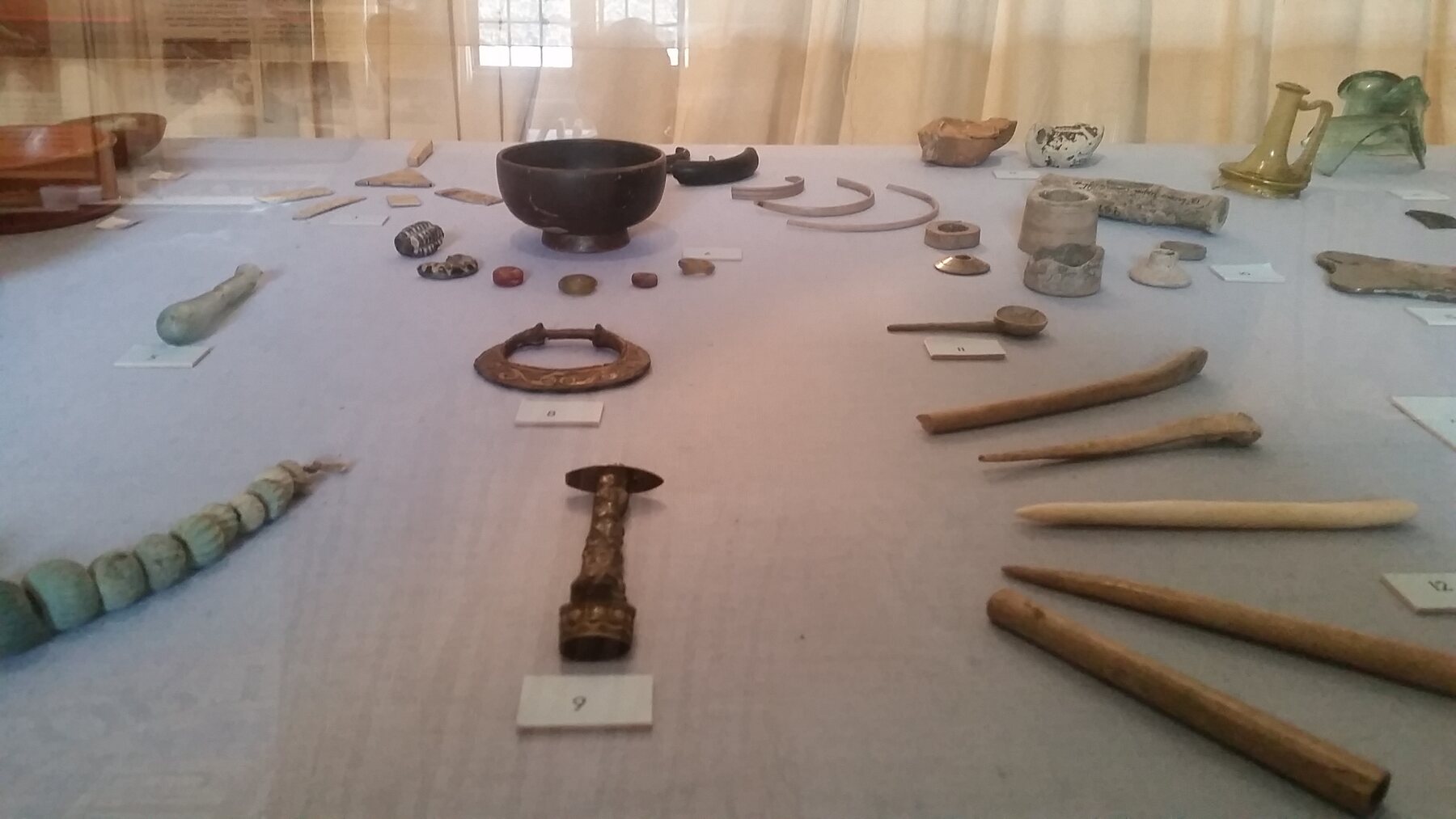
The Romans must also have assembled ships, troops, animals and supplies in northern Gaul. A recent study suggests that logistical preparation may have begun at least two years before the invasion. Unlike D-Day, however, no Roman maps, loading tables or commanders’ orders have survived.
Feeding an invasion
The 40,000-man problem
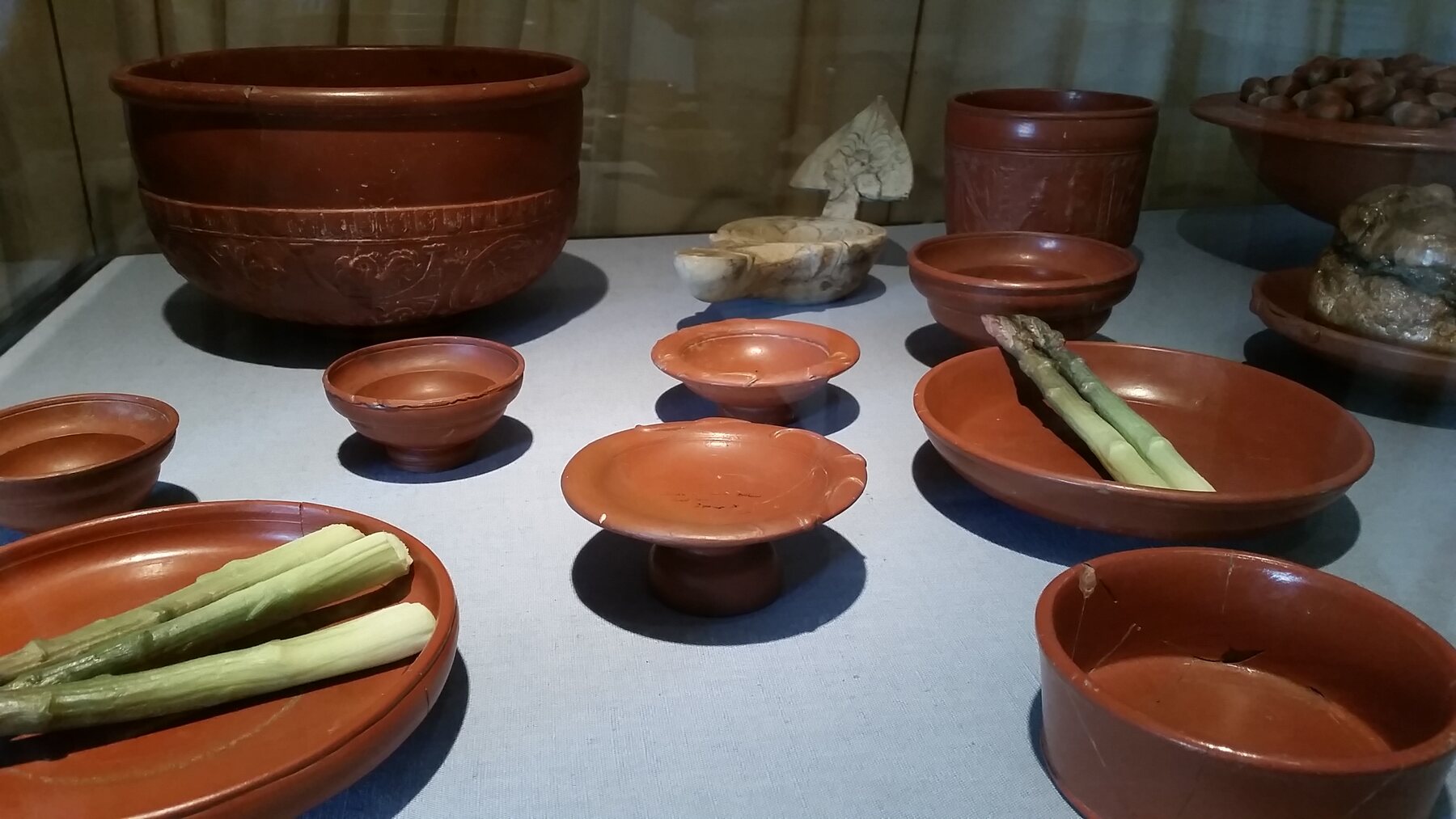
A soldier could not carry everything he needed for a long campaign. Grain, equipment and tents could be distributed between men, pack animals and wagons, but the army still required a continuous flow of supplies from the coast.
Thousands of horses and mules created another logistical challenge. They needed water every day and large quantities of fodder. Animals had to be loaded, kept calm during the crossing, unloaded safely and reunited with their riders, harness and equipment.
Loading order mattered. An artillery engine was little use if its ammunition arrived in another convoy. Cavalrymen needed their horses; animals needed fodder; engineers needed tools; and every unit needed food, water and somewhere defensible to assemble.
- Men and weapons
- Horses and mules
- Wagons and artillery
- Grain and drinking water
- Fodder for animals
- Tools, tents and medical stores
Across the Channel
How were the landings organised?
Dio says the force sailed in three divisions so that it would not be obstructed while landing as one enormous fleet. This could mean separate convoys arriving in sequence, although it does not prove that they used three different beaches.
Hundreds of vessels may have been involved. Warships could protect the movement, while transports carried men, animals and stores. Wind, tide and visibility determined when ships could sail. A delay or storm could scatter formations and separate units from their equipment.
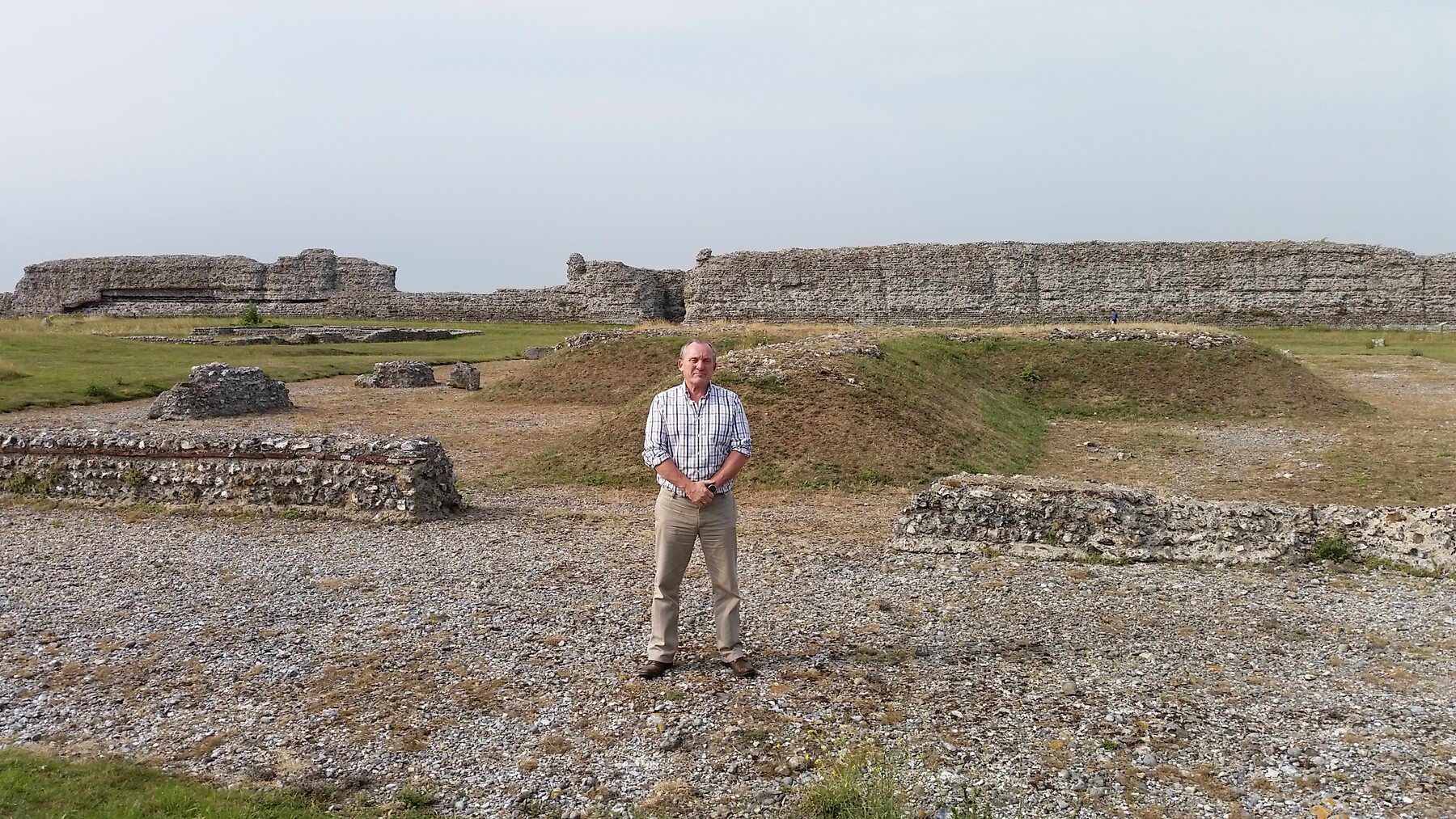
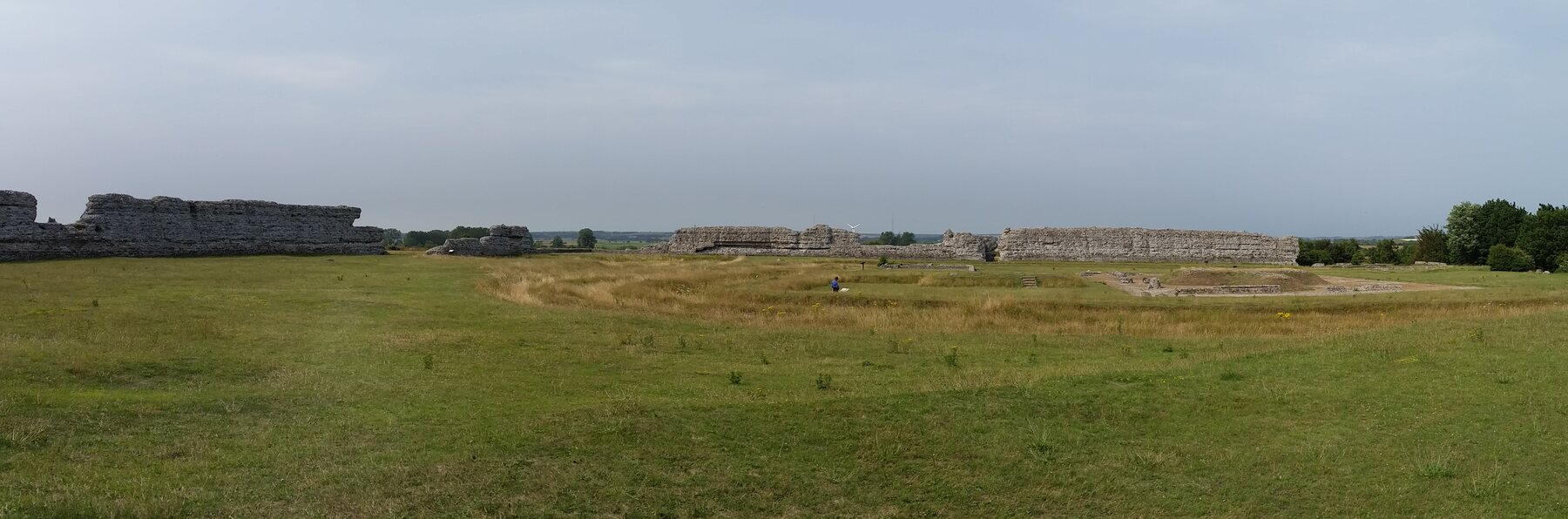
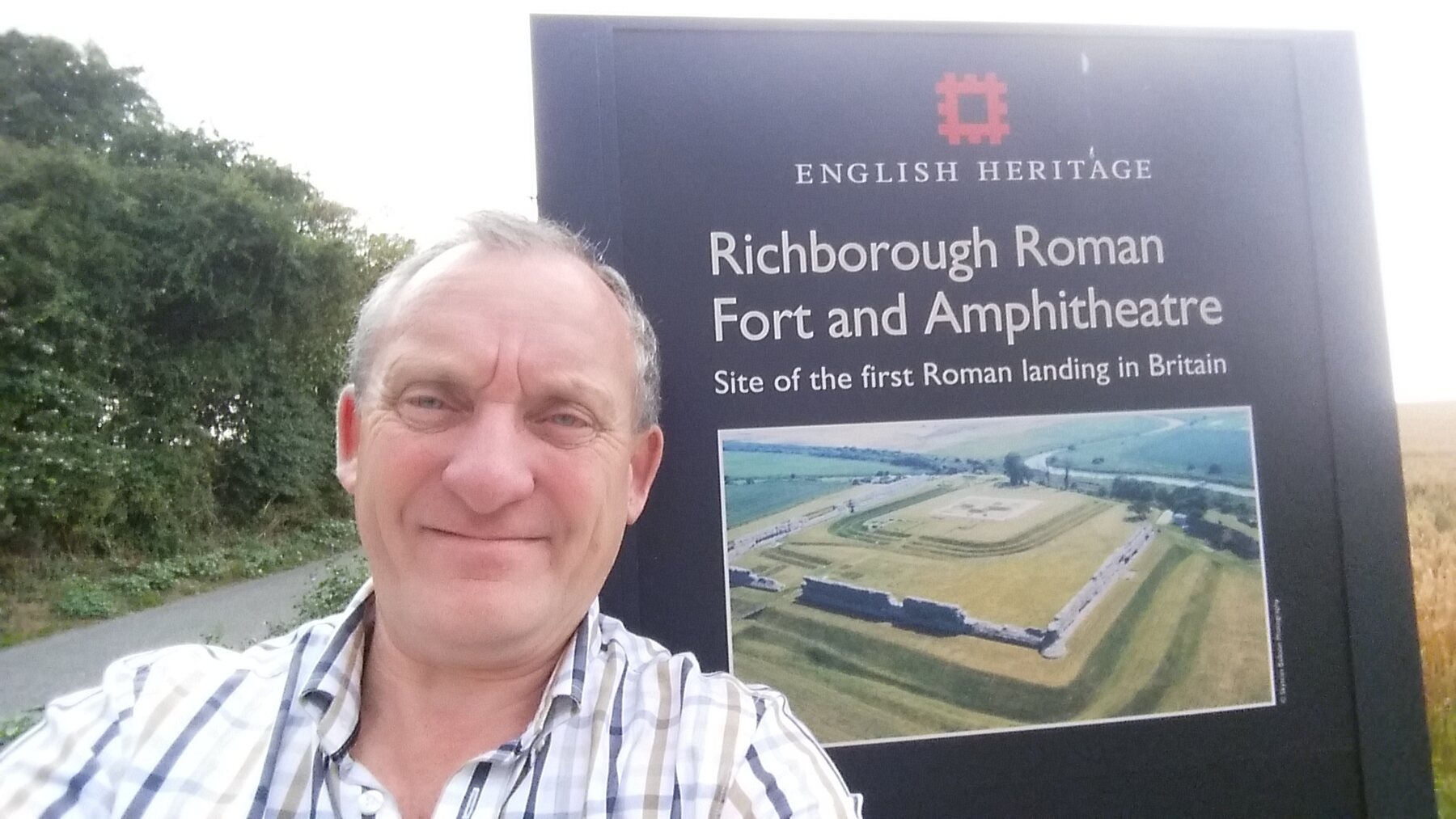
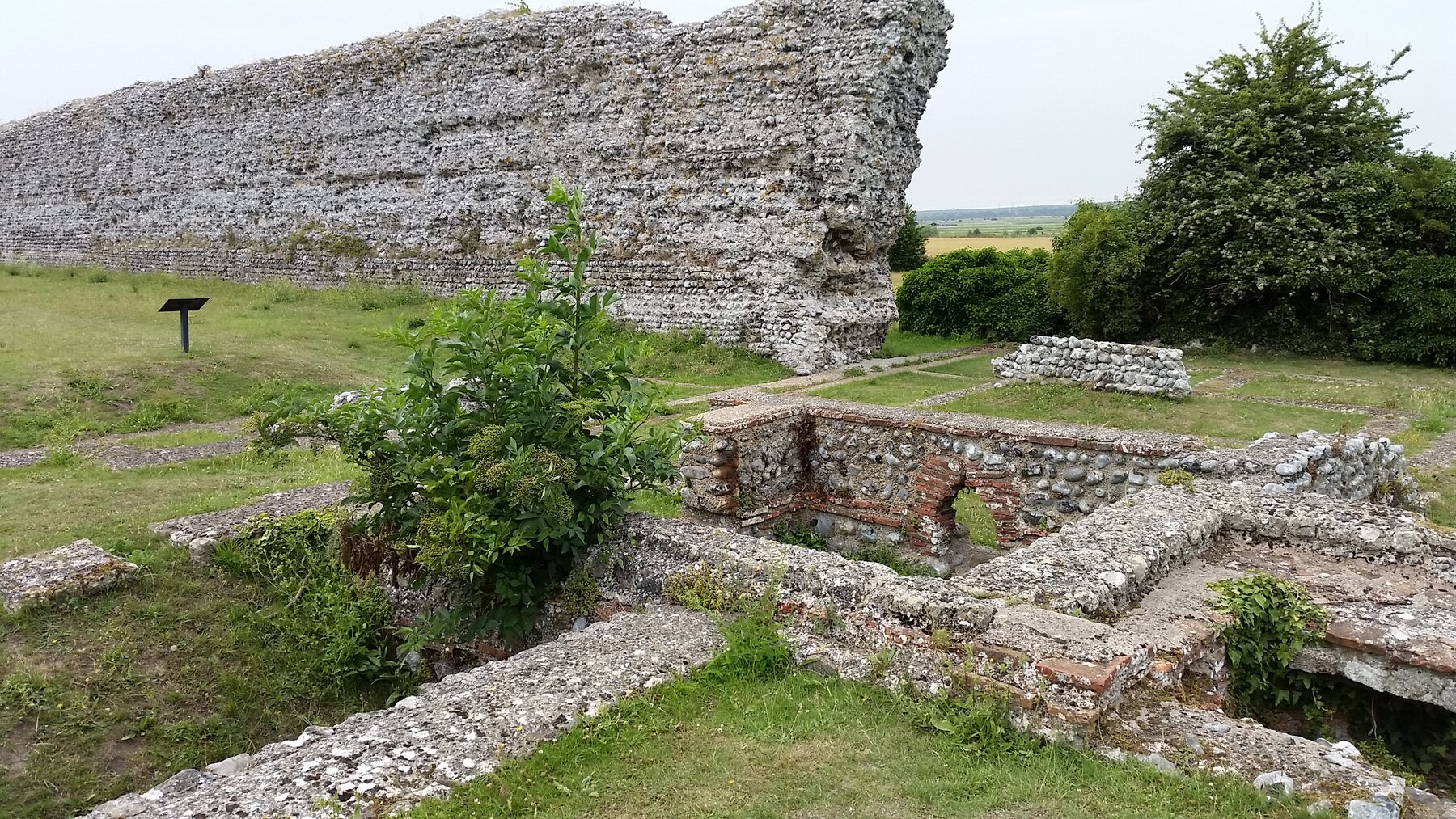
Richborough offered a short crossing from Gaul and access to sheltered water beside the Wantsum Channel. Chichester Harbour has also been proposed, and the exact landing place remains debated. Richborough is a strong candidate, not an unquestionable certainty.
Securing the beachhead
What happened on arrival?
The first troops needed to secure the landing area while others unloaded animals and stores. Units had to assemble, scouts had to search the surrounding country and commanders had to discover whether the Britons were approaching.
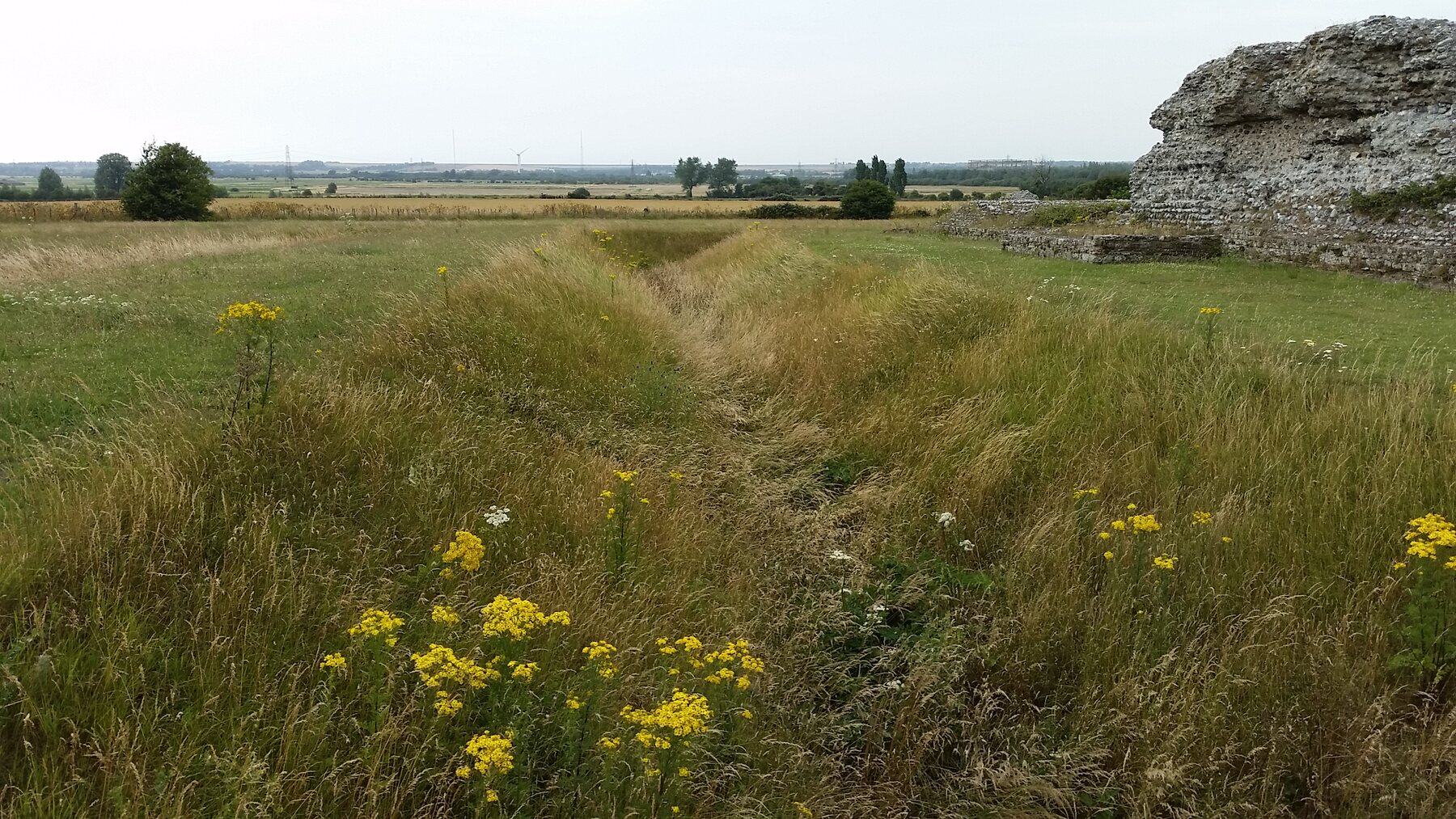
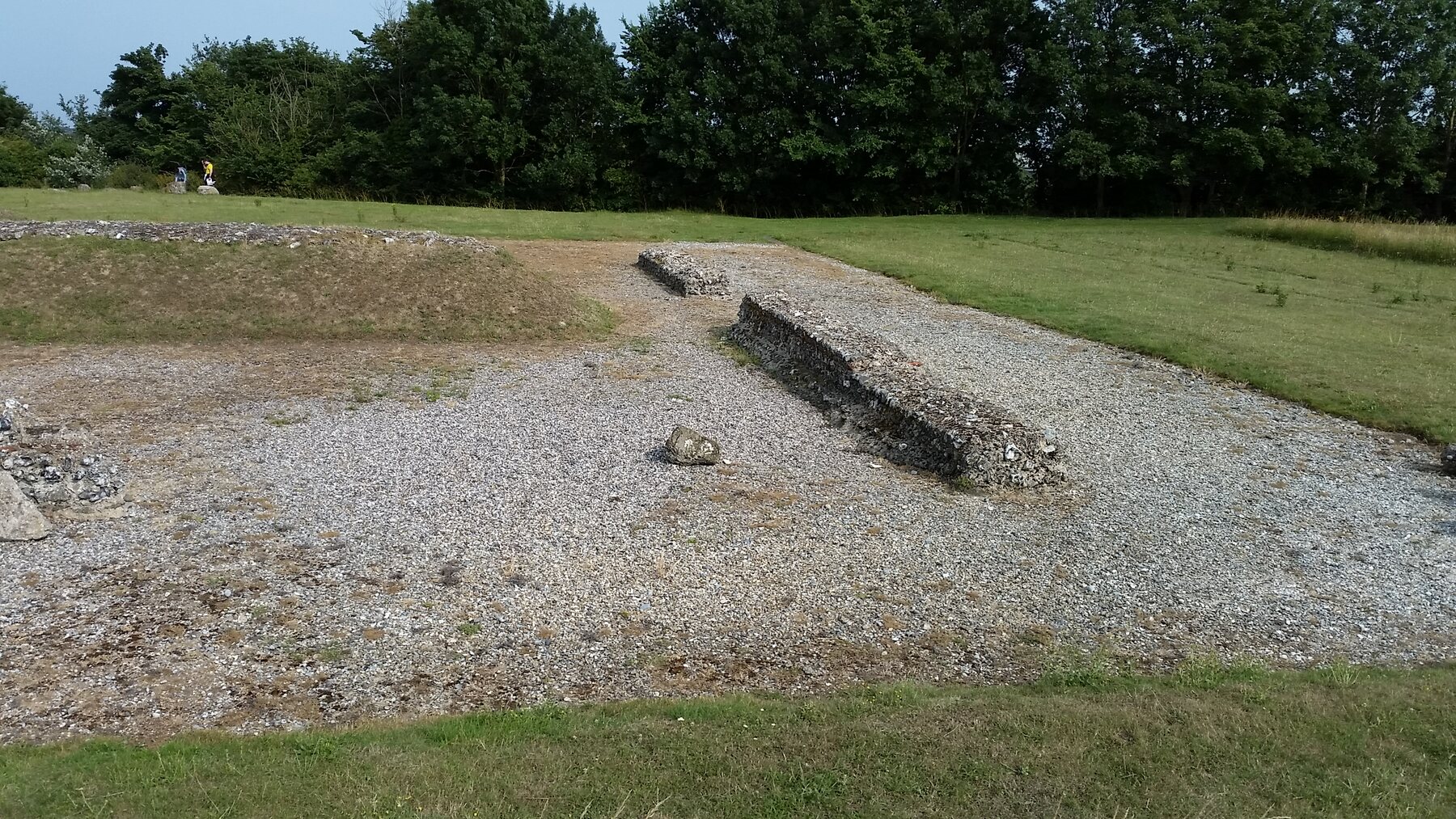
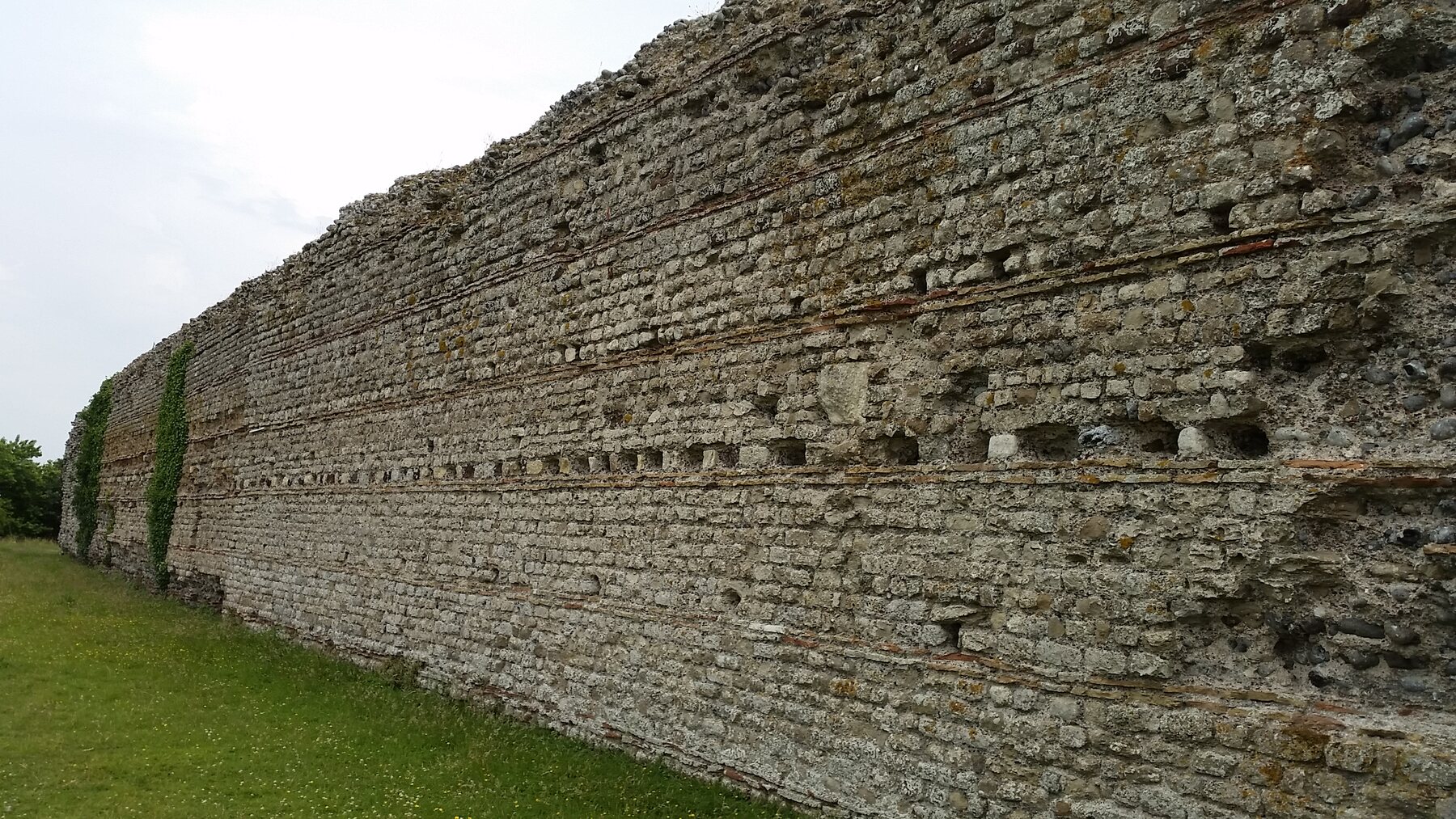
At Richborough, two parallel V-shaped ditches of Claudian date ran for at least 650 metres. Together with a rampart on the seaward side, they appear to have protected a beachhead containing troops, ships and supplies. Large timber buildings, probably including storehouses or granaries, followed.
This does not give us the complete layout of the invasion base, but it supports the idea that the Romans established a defended perimeter before advancing inland.
An empty shoreline
Where were the Britons?
Dio says that British intelligence had led the defenders to believe that the Romans would not come. The delay caused by the soldiers’ refusal to embark may have reinforced that impression. Britain was also divided among different kingdoms and peoples, not defended by a single permanent national army.
The absence of warriors on the beach does not mean that the Britons had no strategy. Dio says that, once assembled, they avoided close battle and withdrew into woods and marshes. They hoped to exhaust the invaders until the Romans sailed away, as Julius Caesar had done nearly a century earlier.
Allowing the Romans to land was dangerous, but attacking disciplined troops while they were protected by ships and missiles could also have been costly. The Britons may have preferred to fight on ground that restricted Roman formations.
The advance inland
From beachhead to conquest
The army did not remain at the coast. Plautius advanced inland and fought a major two-day battle at a river traditionally identified as the Medway. Dio describes specially trained Batavian auxiliaries swimming across in armour and attacking the horses that pulled British chariots.
The Romans then forced a crossing of the Thames. After the death of the British leader Togodumnus, resistance stiffened. Plautius guarded what he had gained and summoned Claudius, who joined the legions near the Thames before the capture of Camulodunum—modern Colchester.
Suetonius later credited Vespasian with thirty battles, the defeat of two powerful peoples, the capture of more than twenty settlements and the conquest of the Isle of Wight. The unopposed landing had begun a long and difficult war.
Think like a historian
Questions the evidence cannot answer completely
The gaps are not a weakness: they allow pupils to test explanations and distinguish evidence from informed reconstruction.
Evidence and further reading
Sources used
Ancient sources: Cassius Dio, Roman History 60.19–21; Tacitus, Agricola 13–14; Suetonius, Claudius 17; and Suetonius, Vespasian 4.
Richborough and the invasion: English Heritage’s history of Richborough, its account of the Roman invasion of Britain, and Historic England’s archaeological research.
D-Day comparison: The National Archives’ introduction to Operation Overlord and its logistical planning.
The ancient accounts are brief, were written after the event and do not always agree. Modern estimates—especially the total number of personnel, animals and ships—should therefore be treated as reconstructions rather than recorded facts.