
Before the Romans
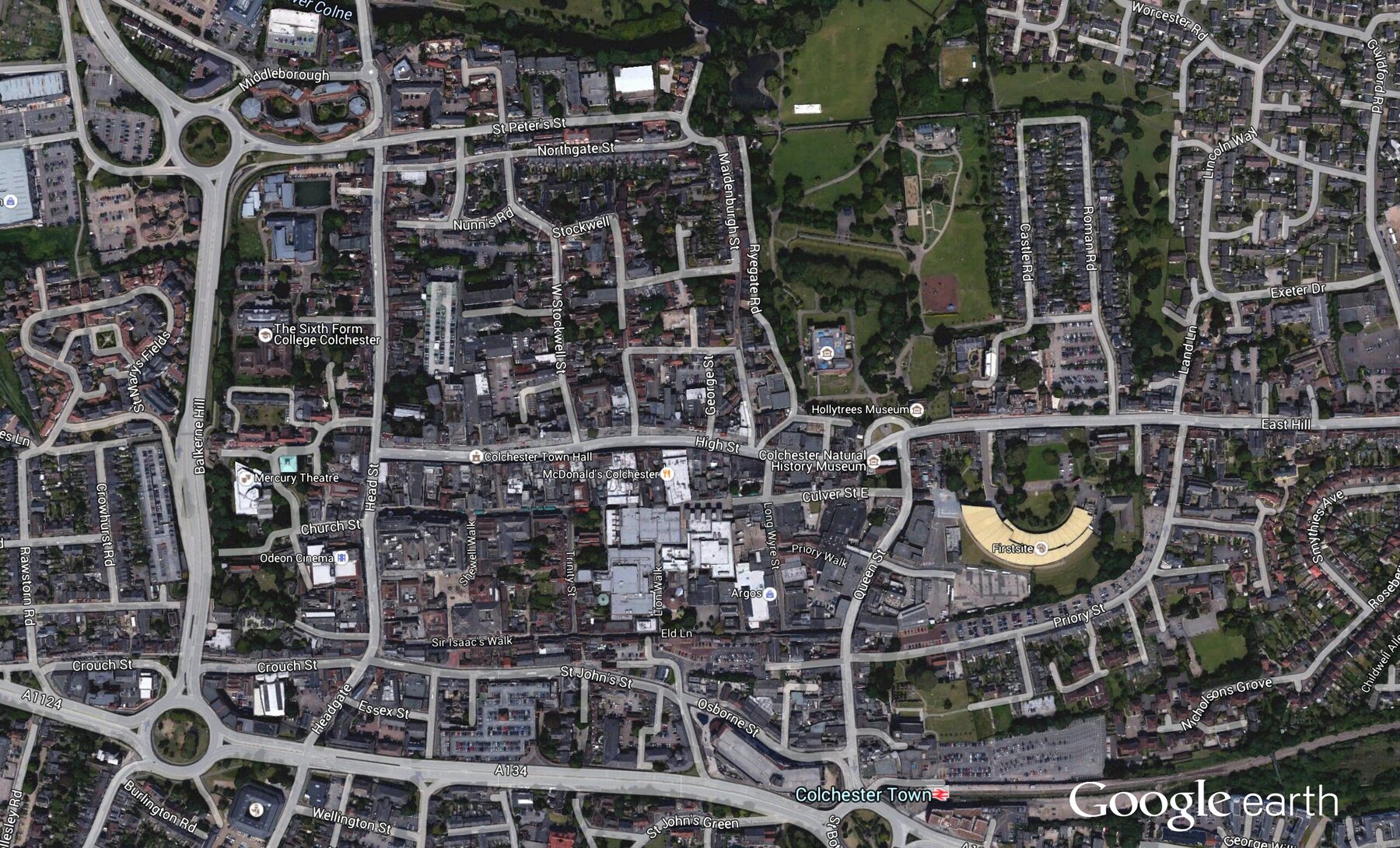
Capital of Cunobelinus
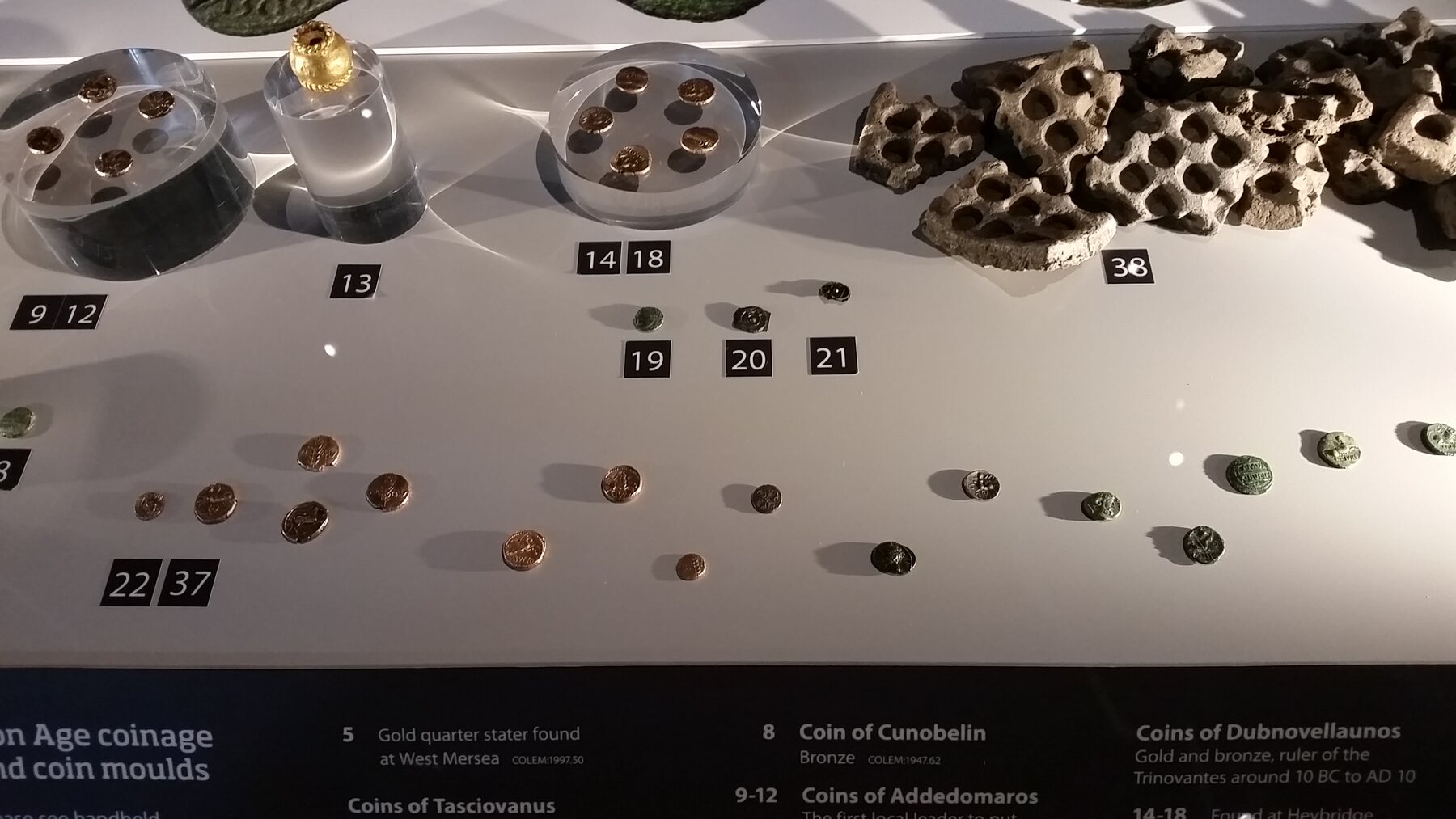
Long before it became a Roman town, Camulodunum was the royal and religious centre of a powerful Iron Age kingdom. Cunobelinus—Shakespeare's Cymbeline—ruled over the Catuvellauni and neighbouring peoples from about AD 10 to 40. His coins, trading connections and defended settlement show that this was already one of Britain's most important places.
The Roman town later occupied part of this much larger landscape. Calling it simply “Colchester” is convenient, but the ancient writers knew the British centre as Camulodunum.
Names to know: Cunobelinus was the king; the Catuvellauni were his people; Camulodunum was his capital.
From the Medway to the Thames
Plautius waits for the emperor
In AD 43 Aulus Plautius led four legions and many auxiliary troops into Britain. After the major two-day battle conventionally associated with the River Medway, the Romans pursued the Britons and forced a difficult crossing of the Thames.
Cassius Dio says that British resistance stiffened after the death of Togodumnus. Plautius secured what he had gained and sent for Emperor Claudius. The emperor had arranged to be summoned if the campaign reached a decisive moment.
“Plautius ... sent for Claudius.”
Cassius Dio, Roman History 60.21Claudius brought reinforcements and impressive equipment. Dio even mentions elephants. The emperor took formal command for the advance on Camulodunum, giving the final victory the prestige of an imperial conquest.

Claudius at Camulodunum
Battle, surrender—or both?
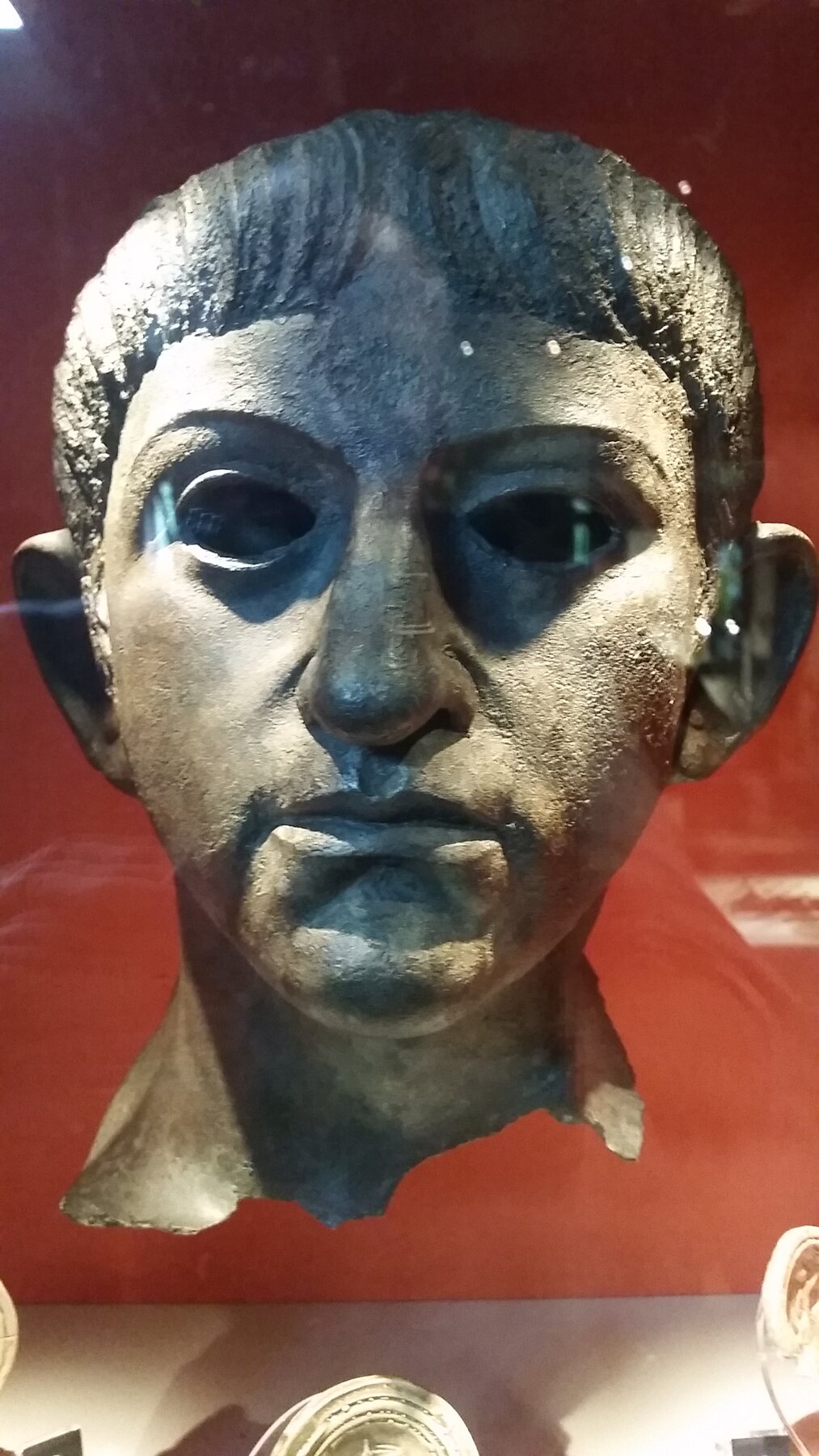
Dio says Claudius crossed the river, defeated the Britons who had assembled to oppose him and “captured Camulodunum, the capital of Cynobellinus”. He then received the submission of numerous peoples, some peacefully and others by force.
Suetonius presents a more flattering version: Claudius received the submission of part of Britain “without any battle or bloodshed”. The two accounts do not fit perfectly. Dio may preserve fighting omitted by an author intent on praising an easy imperial victory.
Claudius spent only sixteen days in Britain. He returned to Rome for a triumph and left Plautius to continue the conquest of the remaining districts.
A colony for veterans
Retired soldiers with a military purpose
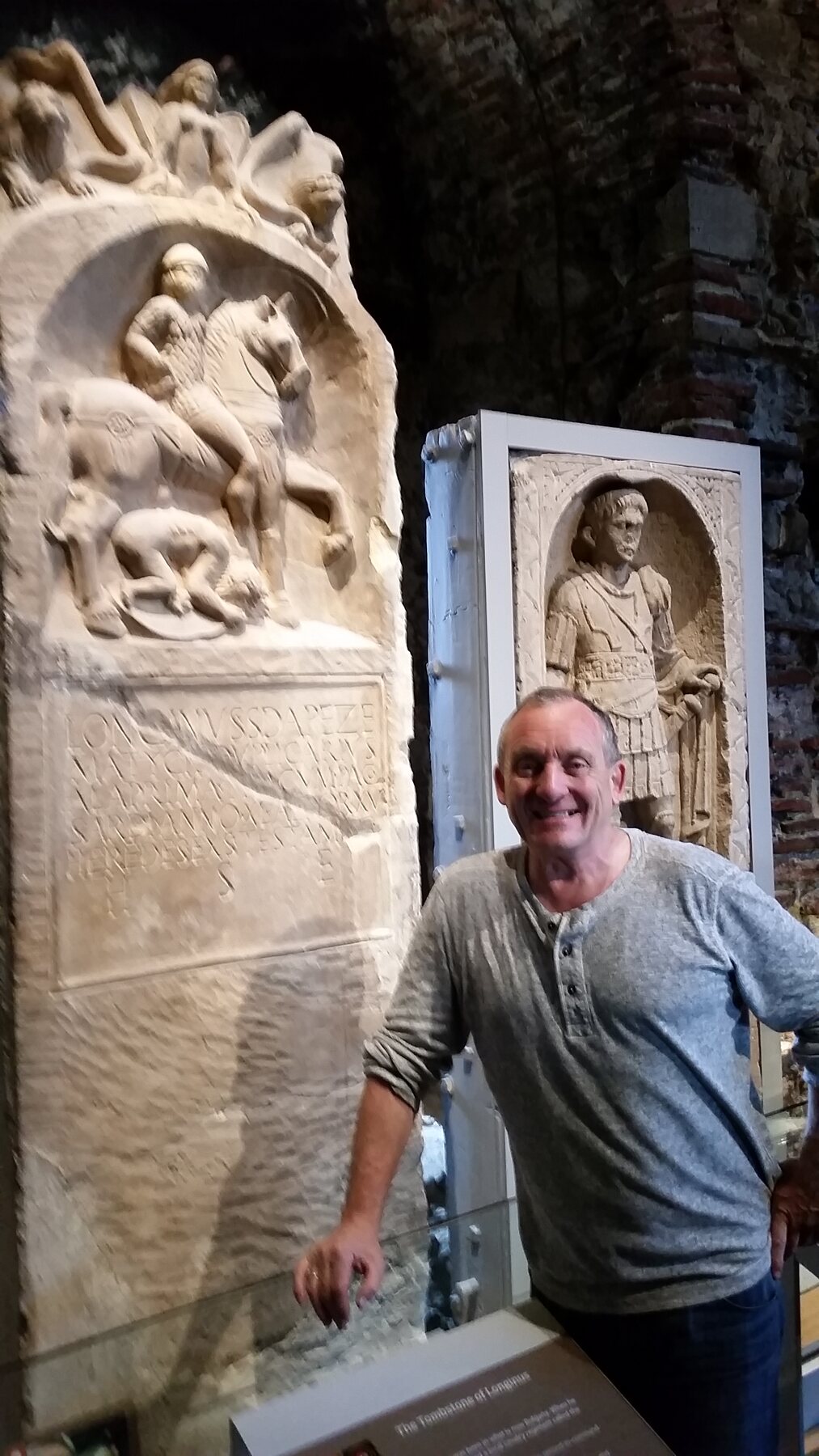
The army first established a legionary fortress at Camulodunum. In AD 49 the legion moved on and the site became Colonia Victricensis, Britain's first Roman colony. Retired legionaries received land and settled with their families.
This was a reward for service, but also good imperial strategy. Tacitus says the veterans were intended to be “a bulwark against revolt” and to accustom friendly Britons to Roman law. They could support the provincial authorities in an emergency, while their streets, houses, baths and markets displayed a Roman way of life.
The colony reused the fortress grid and some military buildings. It rapidly became an administrative and commercial centre—Britain's first Roman capital.
“A bulwark against revolt.”
Tacitus, Agricola 14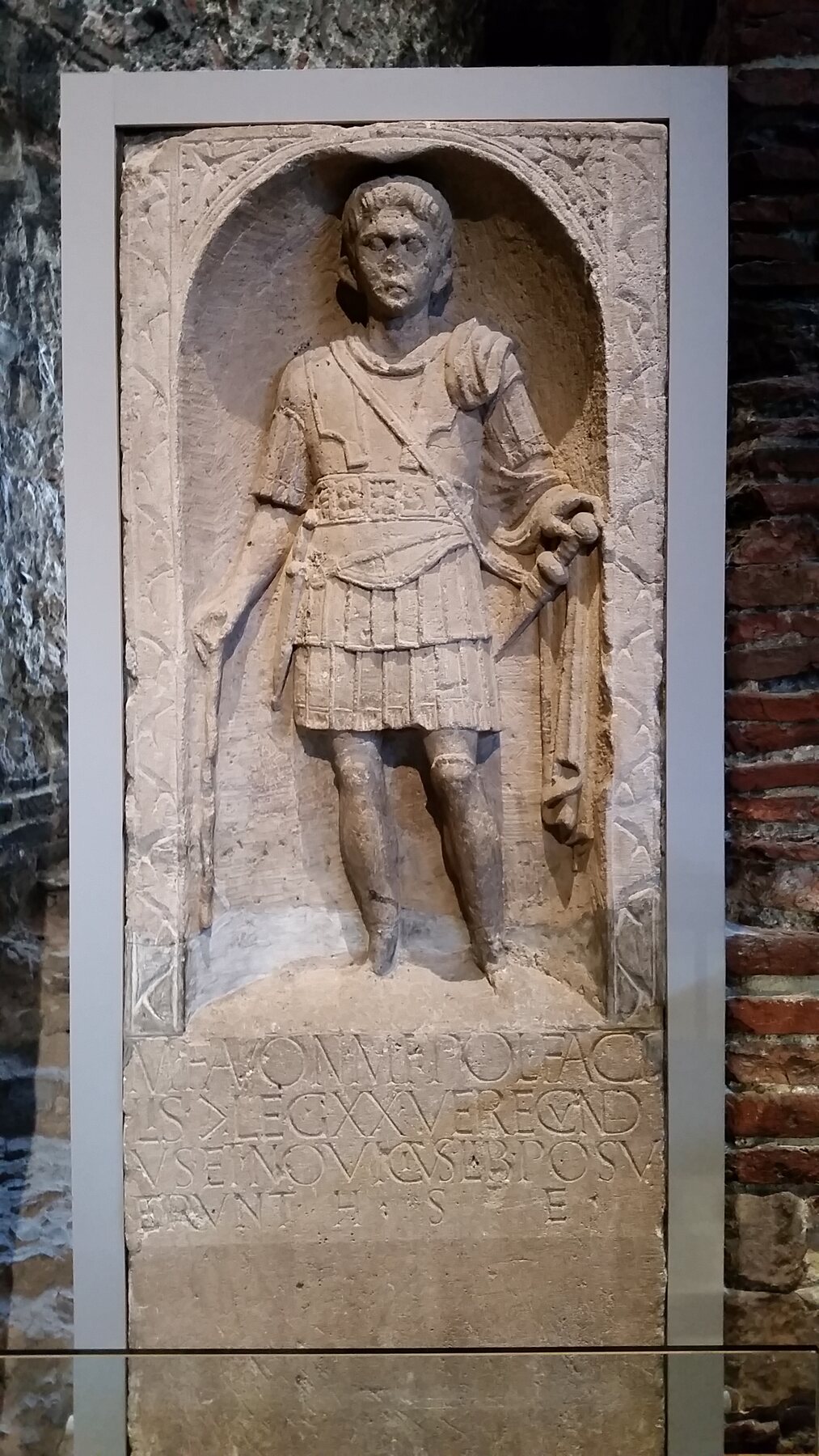
The Temple of the deified Claudius
Religion, loyalty and resentment
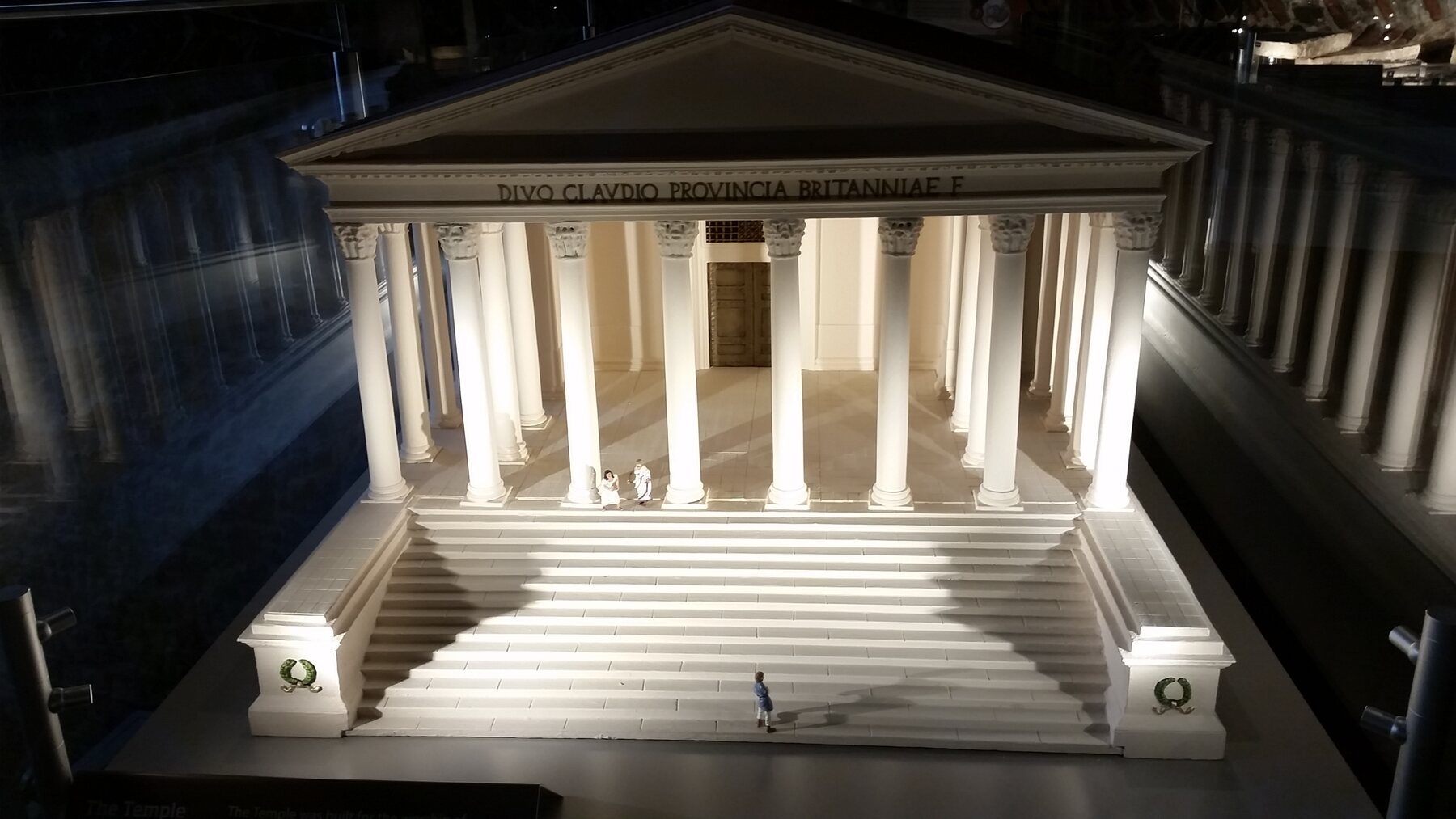
After Claudius died in AD 54 the Senate declared him a god. A vast temple was built at Camulodunum for his imperial cult. Its podium survives beneath Colchester Castle and its model shows why it was probably the largest classical temple in Roman Britain.
The cult was not simply private worship. Public sacrifice demonstrated loyalty to Rome and to the emperor's rule. Local elites could become priests, but Tacitus says the priesthood forced them to pour out their fortunes on ceremonies.
Resentment had deeper causes. Veterans had expelled local people from homes and land and treated them, Tacitus says, as captives and slaves. Roman tribute and other financial demands added to the burden. The temple came to symbolise foreign power rather than shared prosperity.
“A citadel of an eternal tyranny.”
Tacitus, Annals 14.31It is more accurate to say that the imperial cult imposed public religious and financial obligations than that every inhabitant was personally forced to worship Claudius.
AD 60 or 61
Boudica's first target
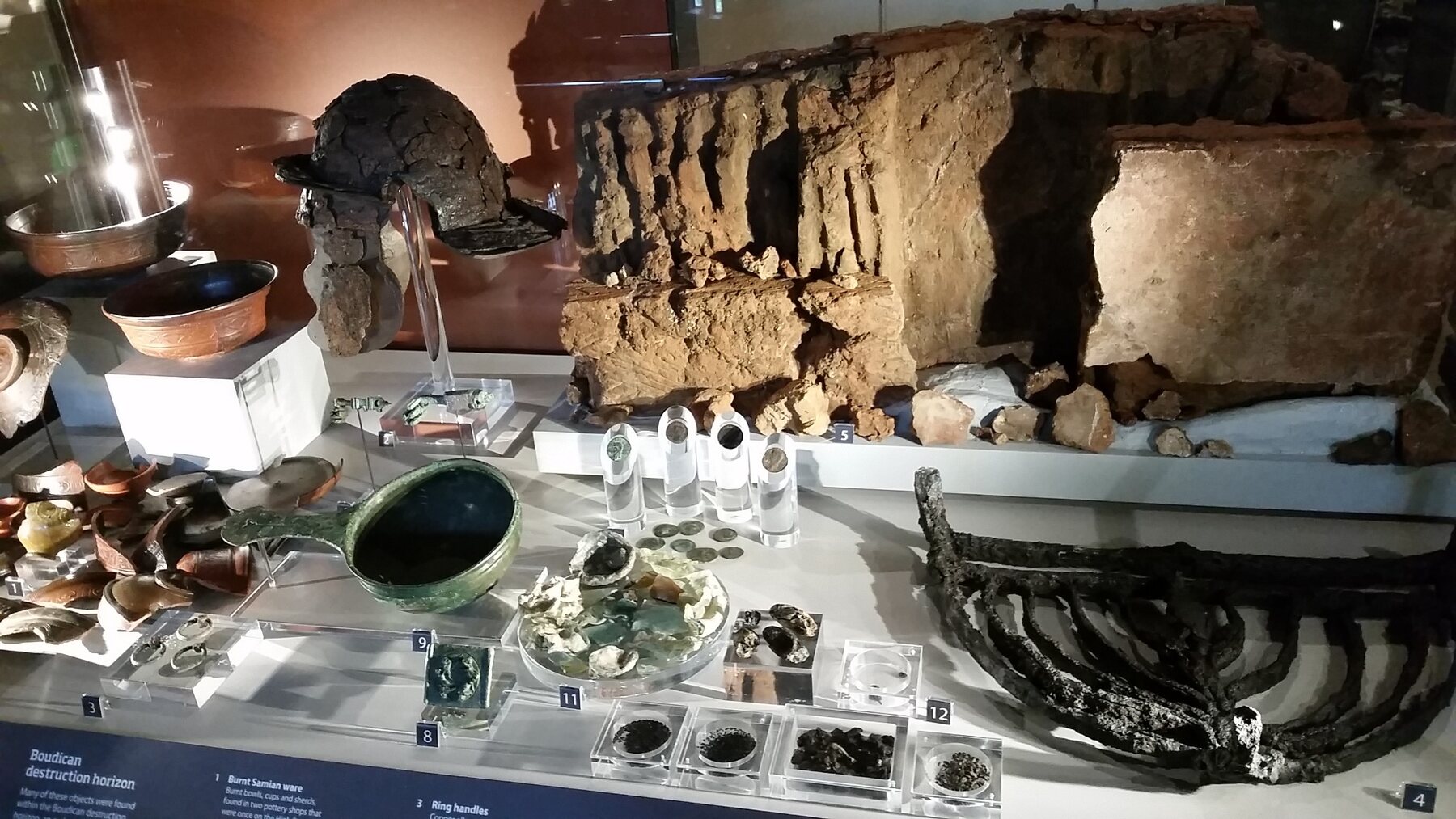
When the governor Suetonius Paulinus was campaigning in Wales, the Iceni rebelled under Boudica. The neighbouring Trinovantes had strong reasons to join them, and the hated colony at Camulodunum was the obvious first target.
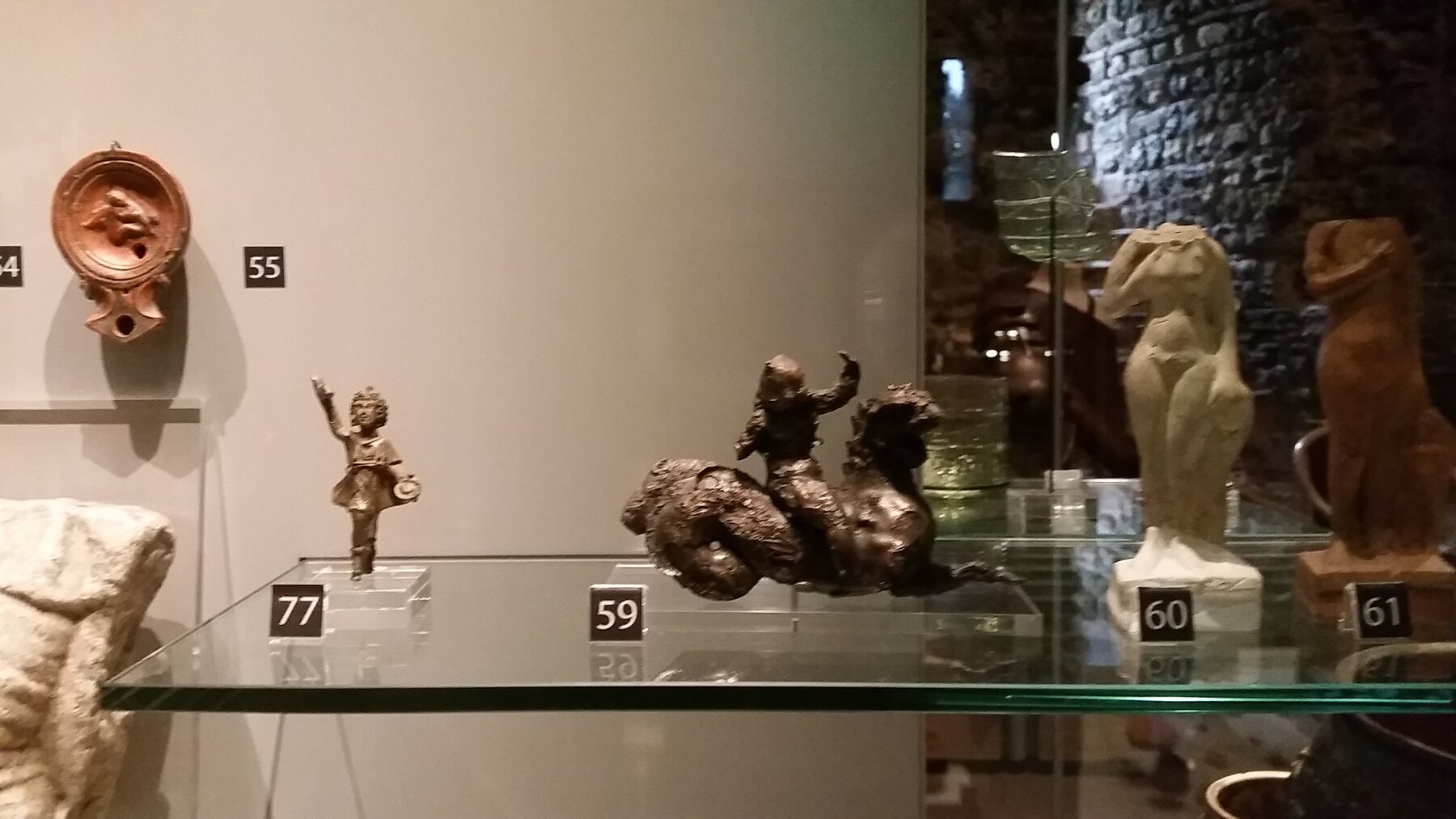
The danger was recognised too late. The town had no defensive wall or rampart, the veterans had neglected to fortify it, and only 200 poorly equipped soldiers were sent to help. The defenders gathered in the Temple of Claudius.
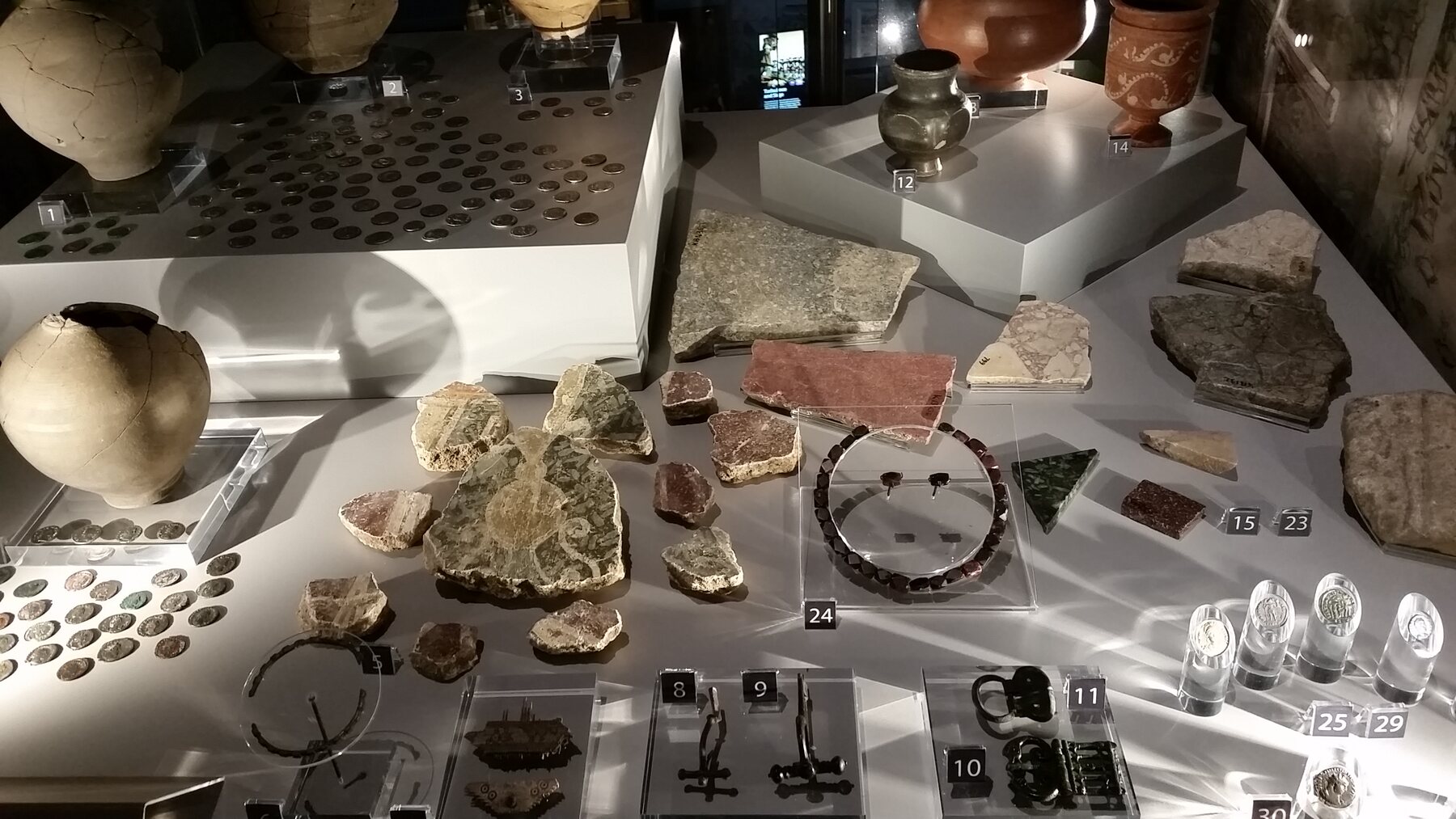
Tacitus says that the rest of the town was “pillaged or fired in the first onrush”. The temple held out for two days before it was stormed. A detachment of the Ninth Legion marched to the rescue, but Boudica's forces destroyed its infantry; only the commander and cavalry escaped.
The sources describe terrible killing, but we should not say that every inhabitant certainly died. Tacitus's later figure of 70,000 victims covers Camulodunum, Londinium and Verulamium together and is probably rhetorical rather than a precise count.
After the fire
A city rebuilt behind walls
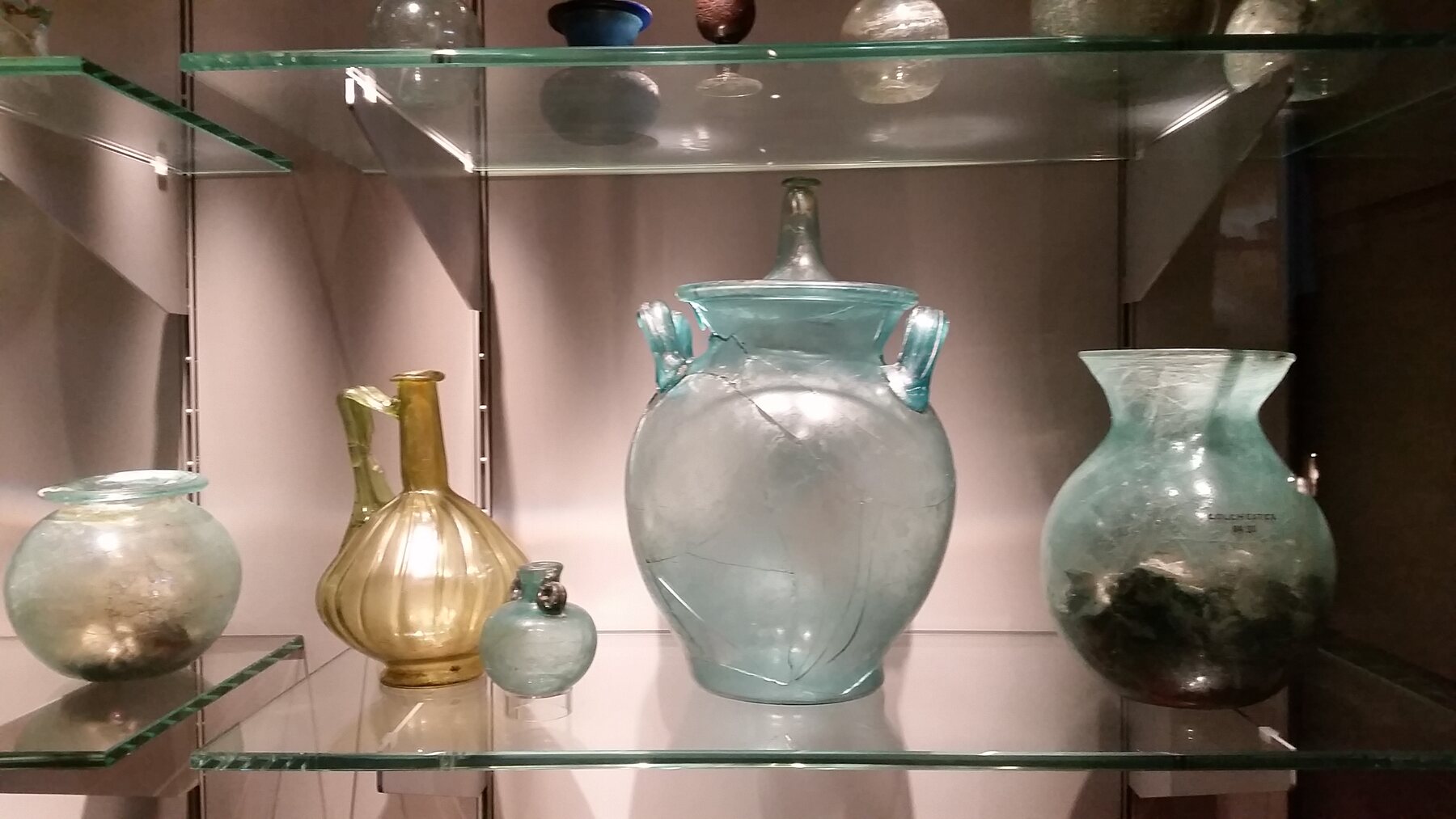
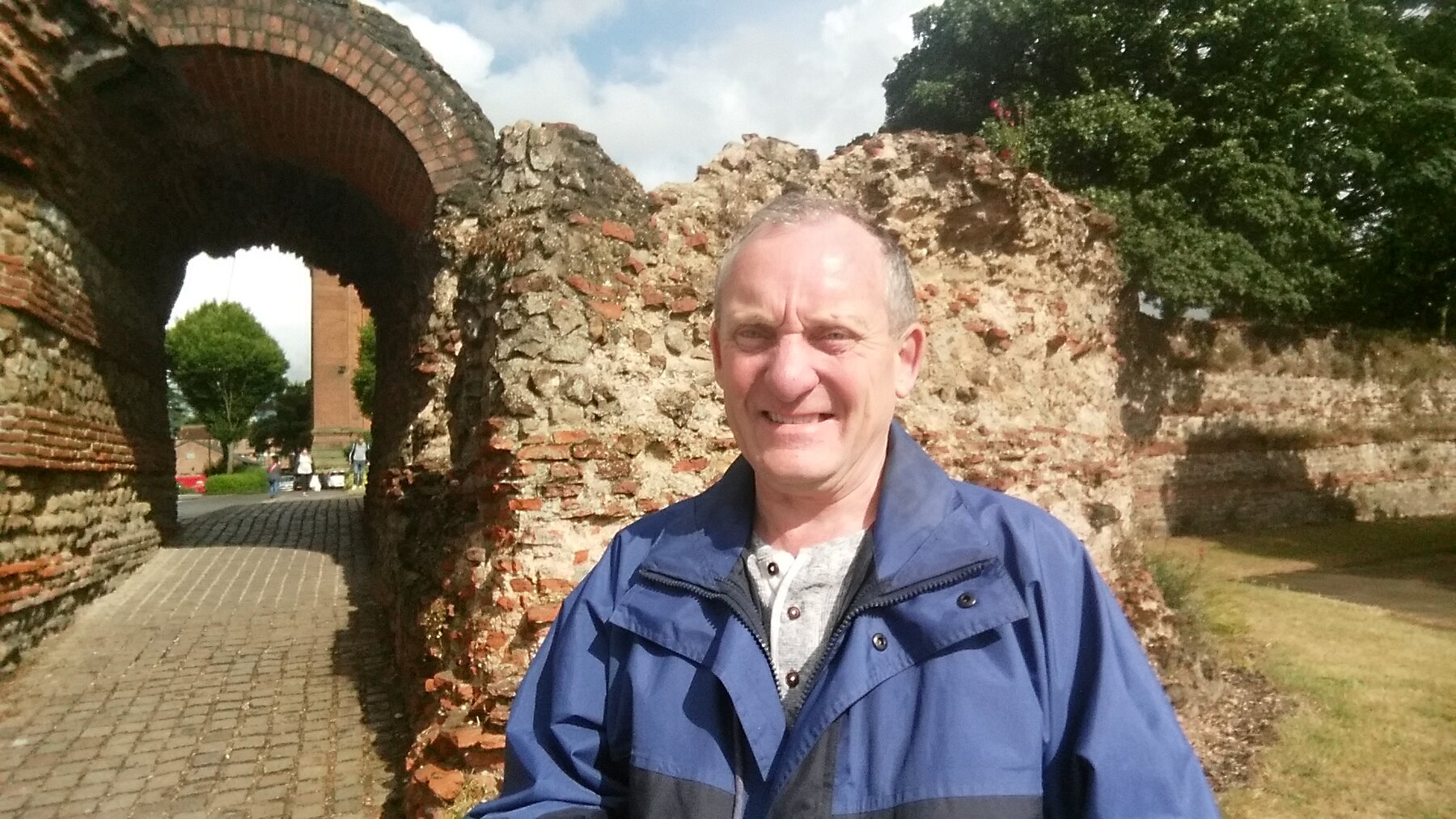
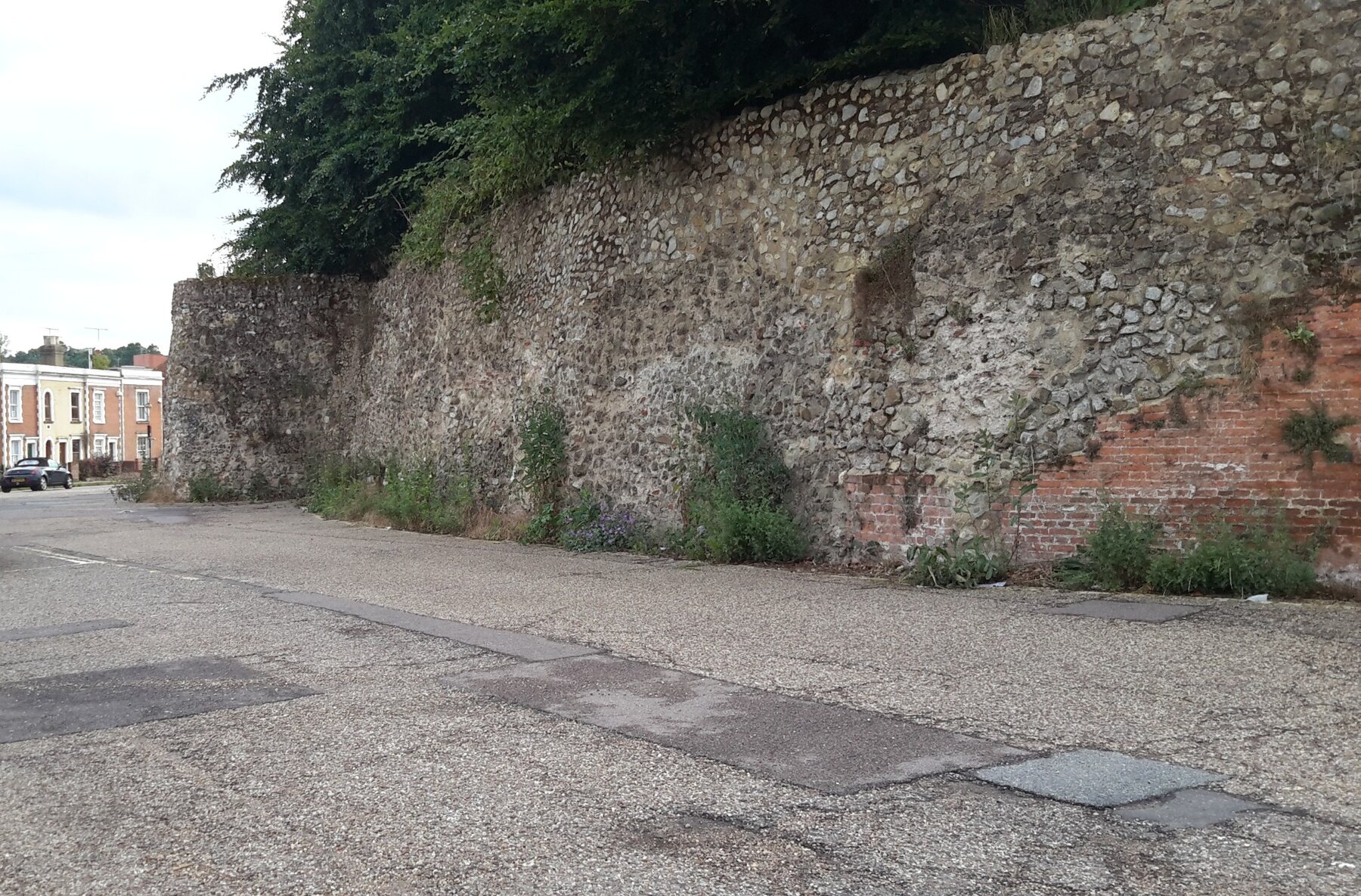
Camulodunum was not abandoned. The Romans rebuilt it on a grander scale and surrounded it with a substantial stone wall—the earliest Roman town wall in Britain. The surviving wall and the Balkerne Gate show how completely the lessons of the rebellion changed the town.
The Balkerne Gate had four passageways: two broad arches for wheeled traffic and two smaller ones for pedestrians. It became the largest known Roman gateway in Britain. Outside the wall, roads, cemeteries, workshops and suburbs continued to grow.
Colchester never again became the principal provincial capital; that role passed to Londinium. But it remained an important colonia for the rest of Roman rule.
Questions for the classroom
Think like a historian
These questions invite pupils to compare written evidence, material evidence and modern interpretation.
Claudius the conqueror?
Did the emperor win the campaign, or arrive to claim Plautius's victory?
Eleven kings
Why would the triumphal inscription emphasise surrendered kings rather than ordinary people?
Two Roman stories
Why do Dio and Suetonius disagree about whether fighting took place?
A reward or occupation?
How would veterans and displaced Britons describe the colony differently?
A god or a ruler?
Why did the Temple of Claudius become a focus for anger?
No walls
Was the failure to fortify Camulodunum overconfidence, economy or poor planning?
Testing Tacitus
Which archaeological discoveries support his account, and which details cannot be proved?
Rebuilding
What message did the new wall and monumental gate send to inhabitants and visitors?
Evidence and further reading
Sources used
Ancient sources
- Cassius Dio, Roman History 60.20–23—the Thames crossing, Claudius's arrival, Camulodunum and the submissions.
- Suetonius, Claudius 17—the emperor's expedition and triumph.
- Tacitus, Annals 14.31–33—grievances, the unwalled colony and its destruction.
- Tacitus, Agricola 14—the purpose of the veterans' colony.
Archaeology and interpretation
- Historic England: Temple of Claudius and Colchester Castle.
- Colchester Heritage Explorer: the early Roman colonia.
- English Heritage: the Roman invasion of Britain.
Ancient authors wrote for Roman audiences and often shaped events to praise or criticise emperors. Their figures and speeches should be tested against inscriptions and archaeology, not accepted without question.