Speed, skill and mobility
Roman Cavalry
The scouts, messengers and mounted warriors who became the eyes and ears of the Roman Army.
- The Roman Army
- Horses and equipment
- Evidence and interpretation
More than marching infantry
The army’s mobile force
Roman armies are often imagined as great formations of legionaries marching and fighting on foot. Infantry formed their principal striking force, but the army could not operate effectively without horses.
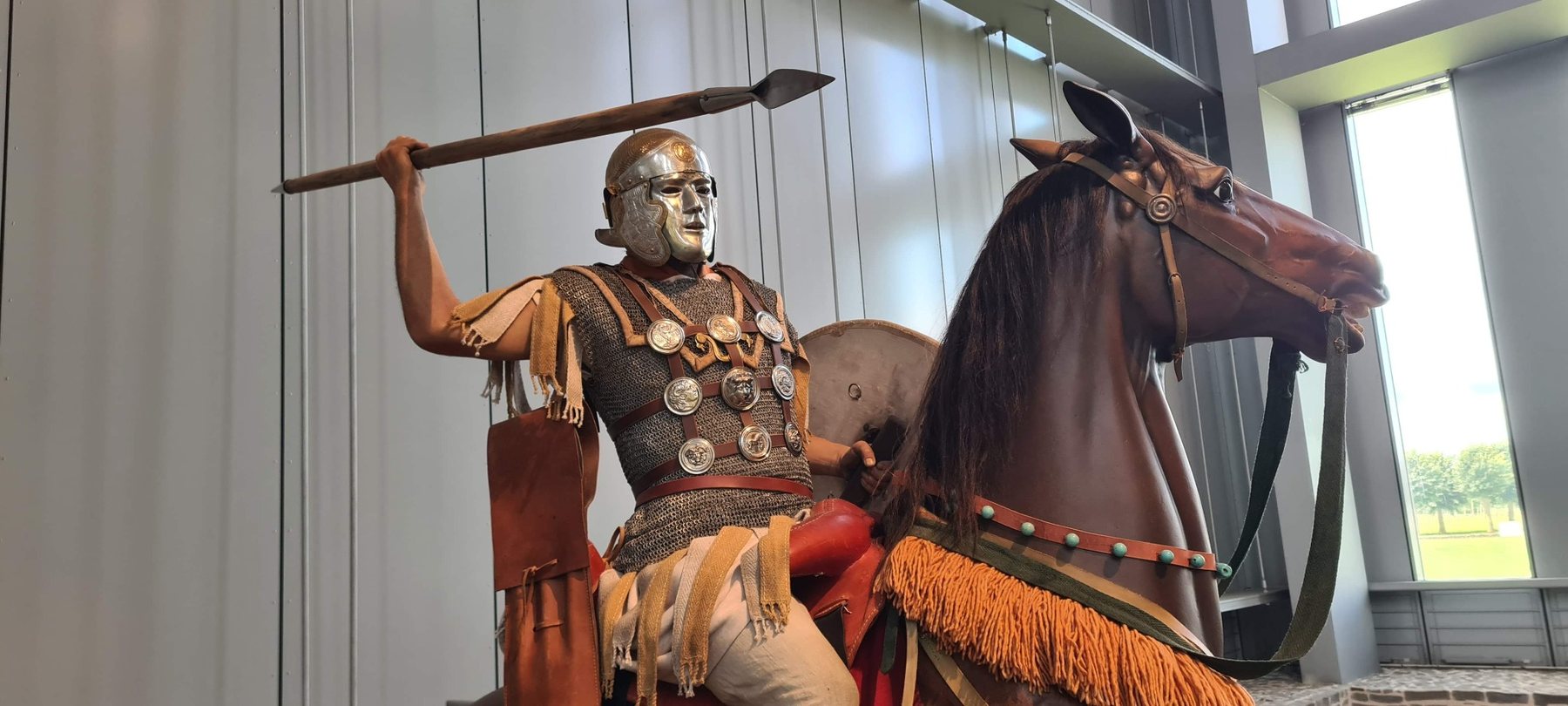
Senior officers rode, while mounted messengers, scouts and cavalrymen provided speed and mobility that infantry alone could never achieve. They gathered information, guarded marching columns, patrolled frontiers and pursued a defeated enemy.
Most fighting cavalry of the Roman Empire served in the auxilia. These permanent regiments were recruited mainly from the non-citizen peoples of the provinces and were trained, organised and commanded as part of the Roman Army.
Before and during battle
What did the cavalry do?
Before an army advanced, mounted scouts searched for the enemy and reported on roads, rivers, fords, narrow passes and difficult ground. Cavalry screened the marching columns and prevented enemy riders from observing Roman movements.
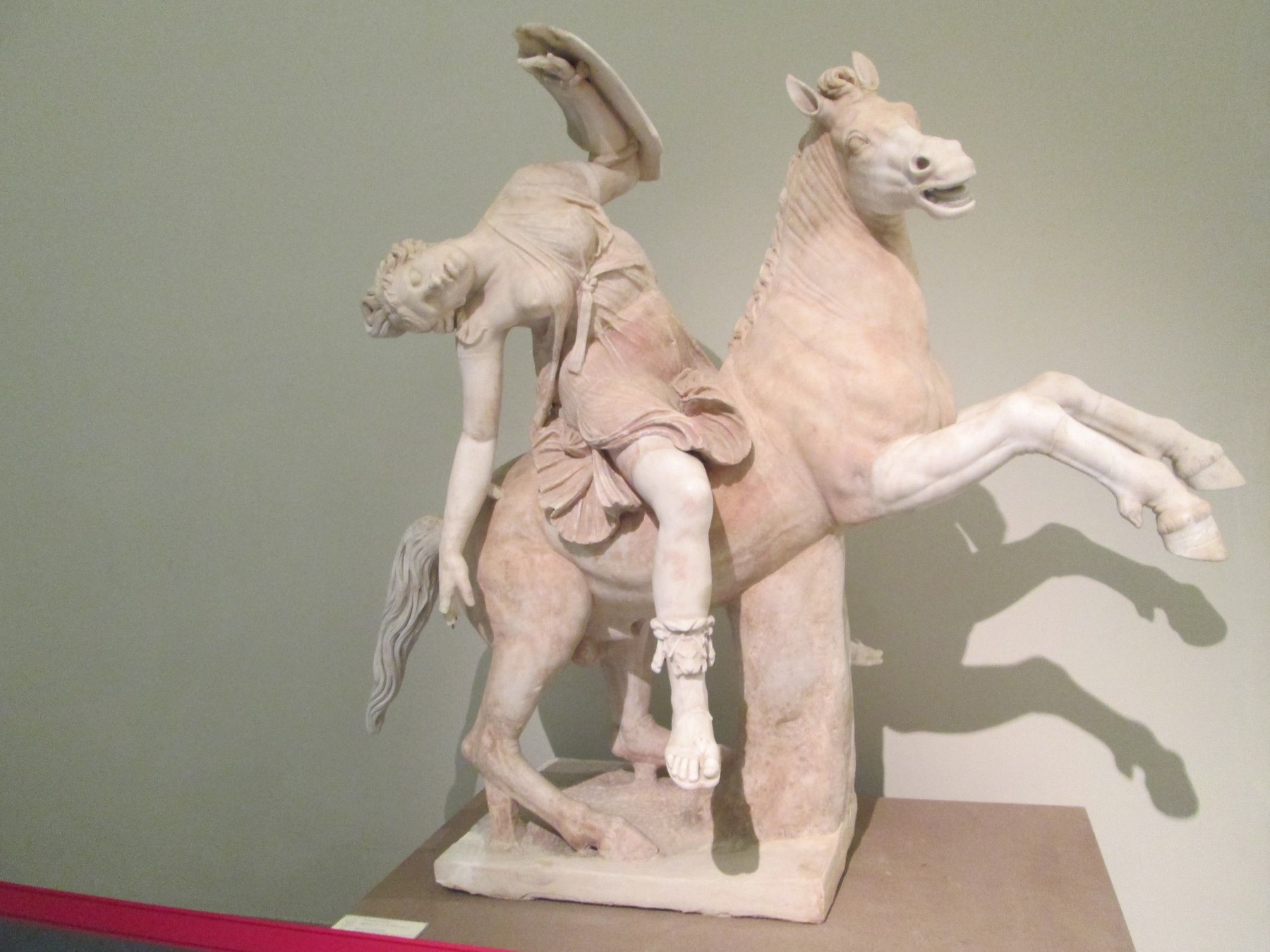
In battle they protected the flanks and rear, drove away opposing cavalry and exploited weaknesses in the enemy line. Once an opponent broke, mounted troops could pursue fleeing warriors and prevent them from regrouping.
- Reconnaissance and intelligence
- Messages and communications
- Protection of flanks and rear
- Outflanking and encirclement
- Pursuit after victory
- Patrolling roads and frontiers
A lesson from campaigning
When cavalry was missing
Julius Caesar experienced the limitations of an army without sufficient cavalry during his first expedition to Britain in 55 BC. Ships carrying most of his mounted troops were driven back by bad weather.
Caesar’s infantry could defeat British forces when they stood and fought, but British charioteers and horsemen could withdraw quickly. Without enough cavalry, the Romans found it difficult to pursue them and turn success into a decisive victory.
The danger was even clearer when Roman infantry faced the mounted armies of Parthia. At Carrhae in 53 BC, the army of Crassus was destroyed by mounted archers and heavily armoured cavalry. Mark Antony’s later Parthian campaign also suffered badly under attack from highly mobile mounted forces.
Regiments and commanders
How was the cavalry organised?
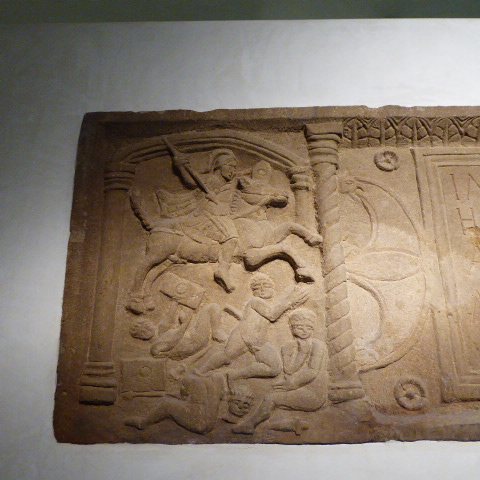
A regiment composed entirely of cavalry was called an ala, meaning “wing”. The name probably reflected the traditional position of cavalry on the wings of an army drawn up for battle.
A standard ala quingenaria contained approximately 500 men. It was divided into troops called turmae, each normally containing about 30–32 riders and commanded by a decurion. The complete regiment was led by a prefect, the praefectus alae.
Larger alae milliariae contained around 750–800 men. Mixed auxiliary regiments, called cohortes equitatae, combined infantry with a smaller mounted contingent.
A rapid-response frontier force
Cavalry on Hadrian’s Wall
Although legionaries helped build Hadrian’s Wall, its forts were generally occupied by auxiliary infantry, cavalry or mixed regiments. Mounted troops could patrol the surrounding country, carry messages between forts and respond quickly to signs of trouble.
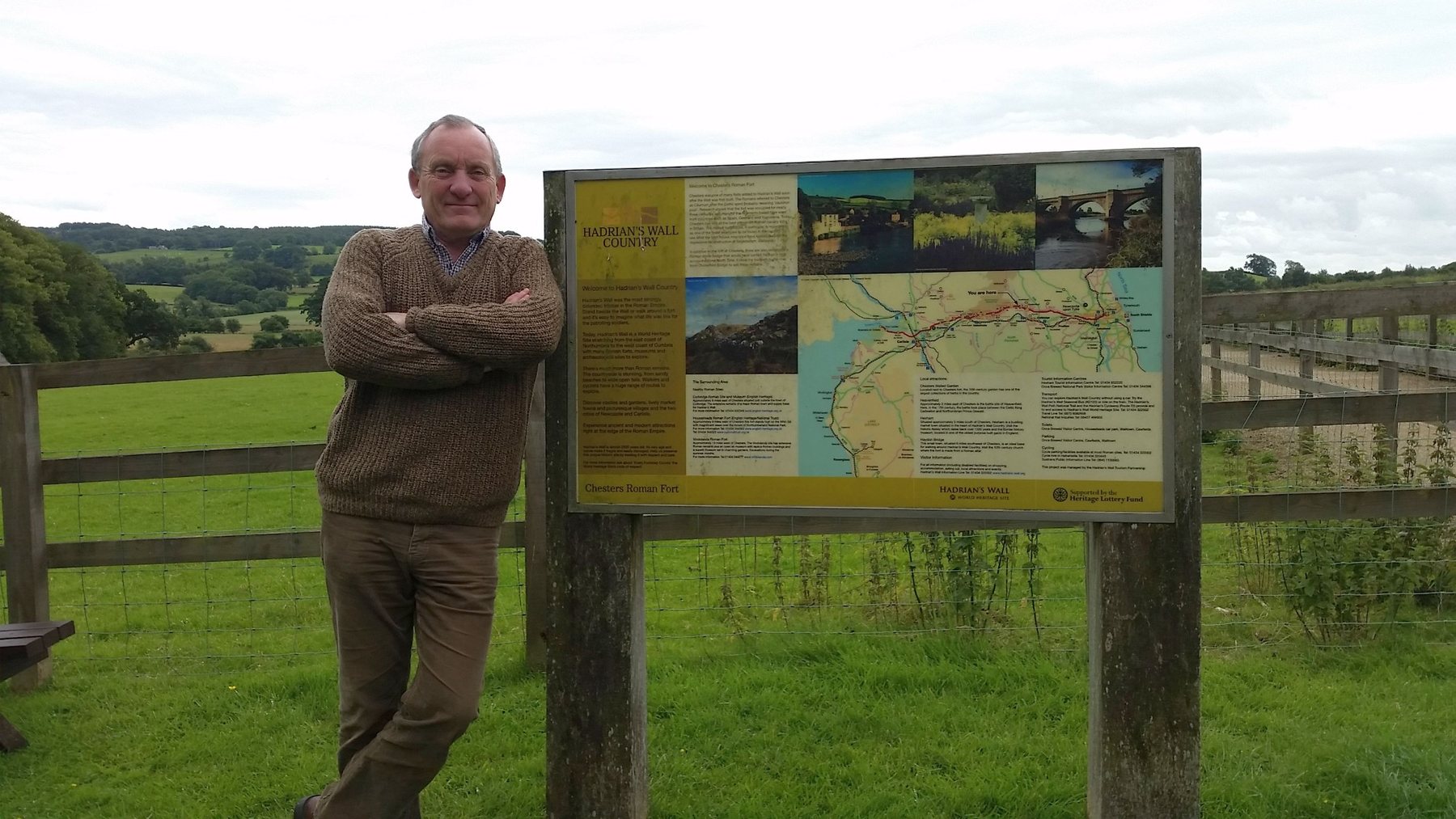
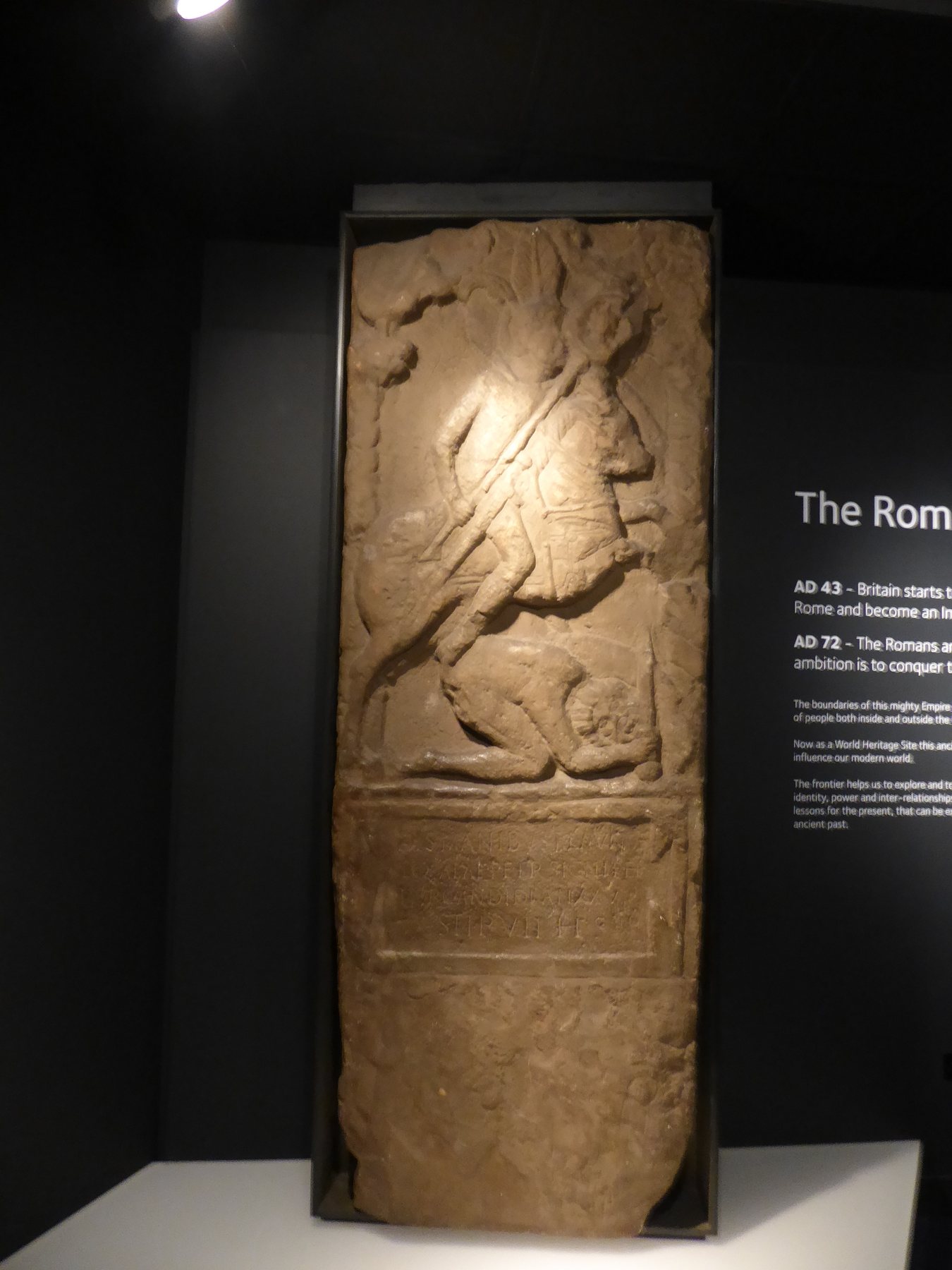
Chesters Roman Fort—known to the Romans as Cilurnum—was built in about AD 124 to house a cavalry regiment of approximately 500 men. Its first known garrison was the ala Augusta ob virtutem appellata: “the cavalry regiment styled Augusta for its valour”.
Chesters was later occupied by the Second Asturians, a cavalry regiment originally raised in northern Spain. It remained an important cavalry base for much of the Roman occupation.
Men and mounts together
Inside a stable-barrack
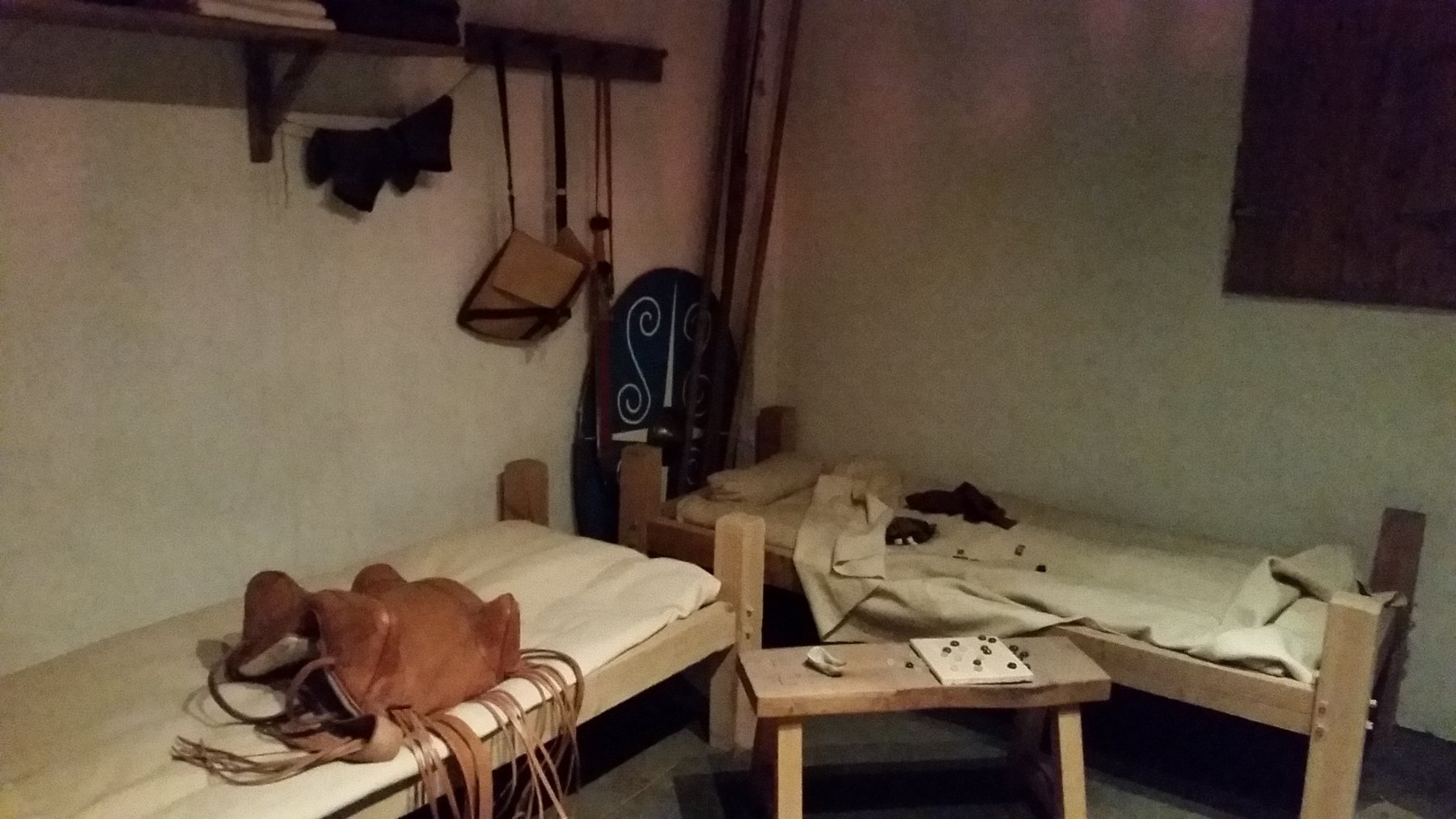
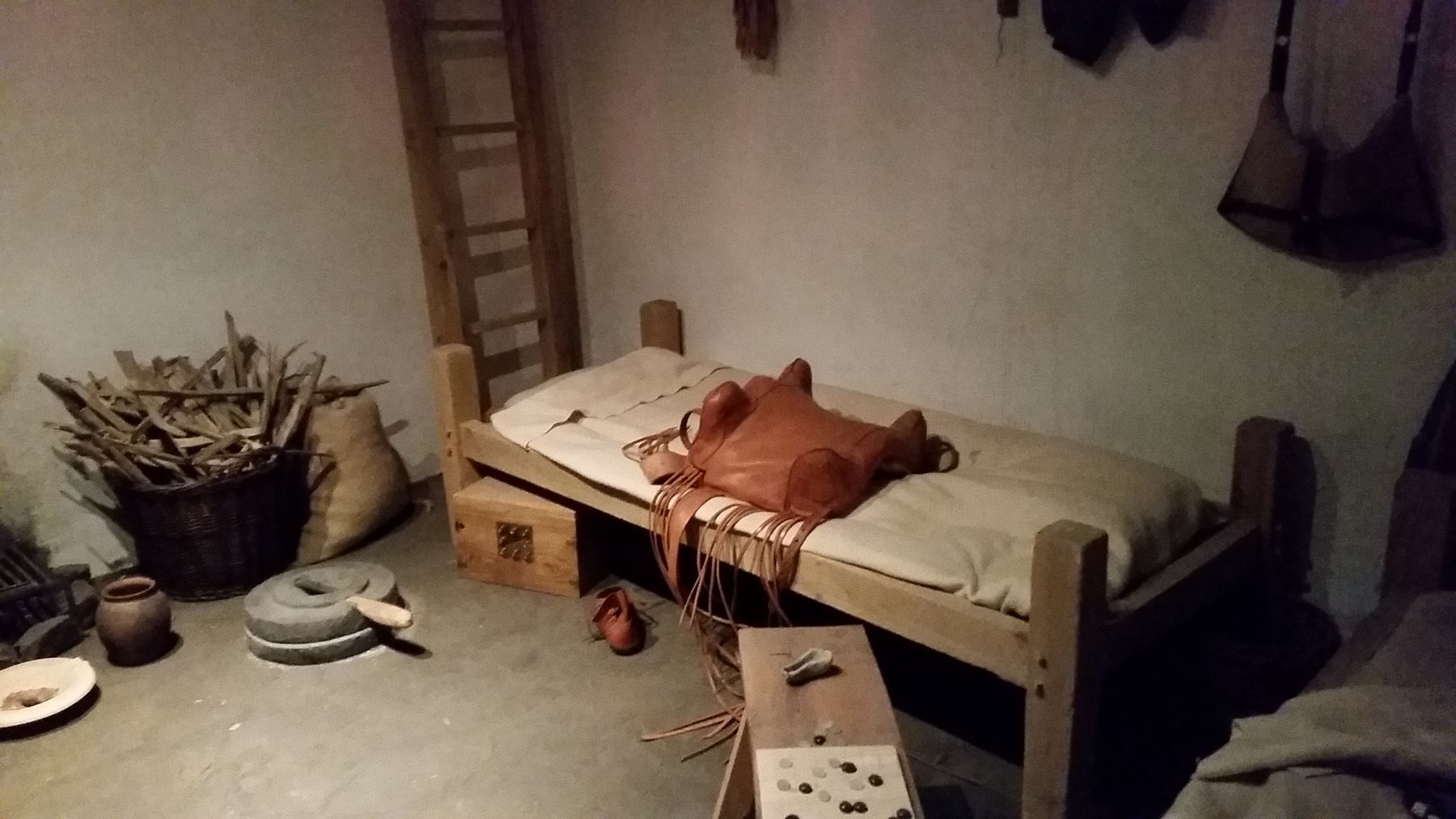
For many years archaeologists were puzzled by the apparent absence of sufficient stables inside cavalry forts. Excavations at Wallsend and South Shields helped provide the answer: riders and horses were accommodated in the same specially designed buildings.
Each pair of rooms housed about three horses in the front room and three soldiers in the room behind. A covered drainage pit collected the horses’ urine and helped keep the stable floor dry, while the soldiers’ room contained a hearth.
A barrack containing ten pairs of rooms could accommodate around 30 riders and horses—approximately one turma. Keeping the men and their mounts close together allowed them to prepare for action quickly.
Skilled riding
No stirrups
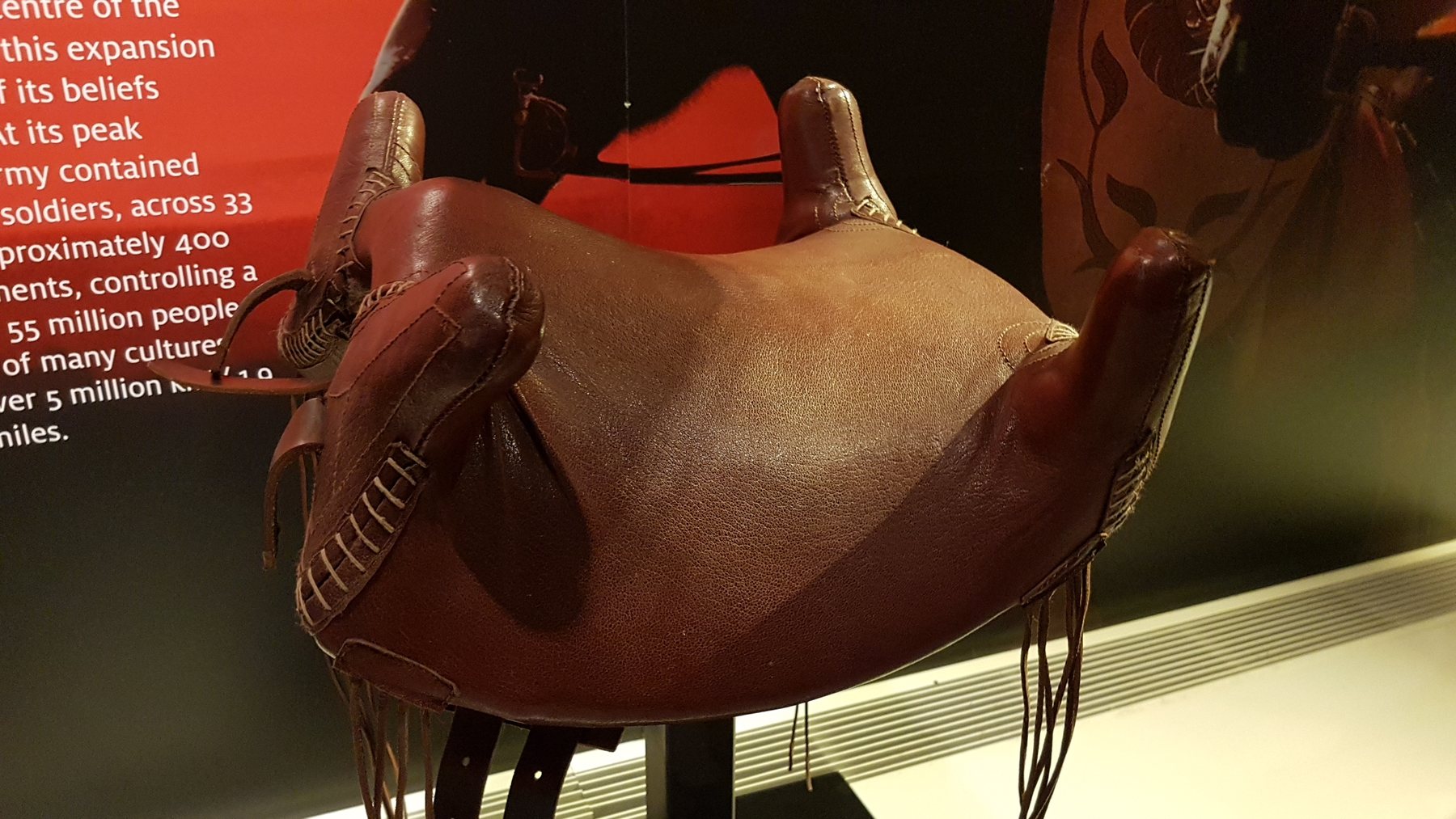
Roman cavalrymen did not use stirrups. Instead, they normally rode on saddles constructed around a rigid wooden frame. The Roman military saddle had four projecting horns—two at the front and two behind the rider’s thighs.
The horns supported the cavalryman when his horse turned sharply or when he used a sword, spear or javelin. They did not lock him permanently into place: effective riding still depended upon balance, strong legs and close control of the horse.
To ride at speed, carry a shield and use a weapon without stirrups required considerable skill and regular training.
Weapons and protection
Equipped to fight from horseback
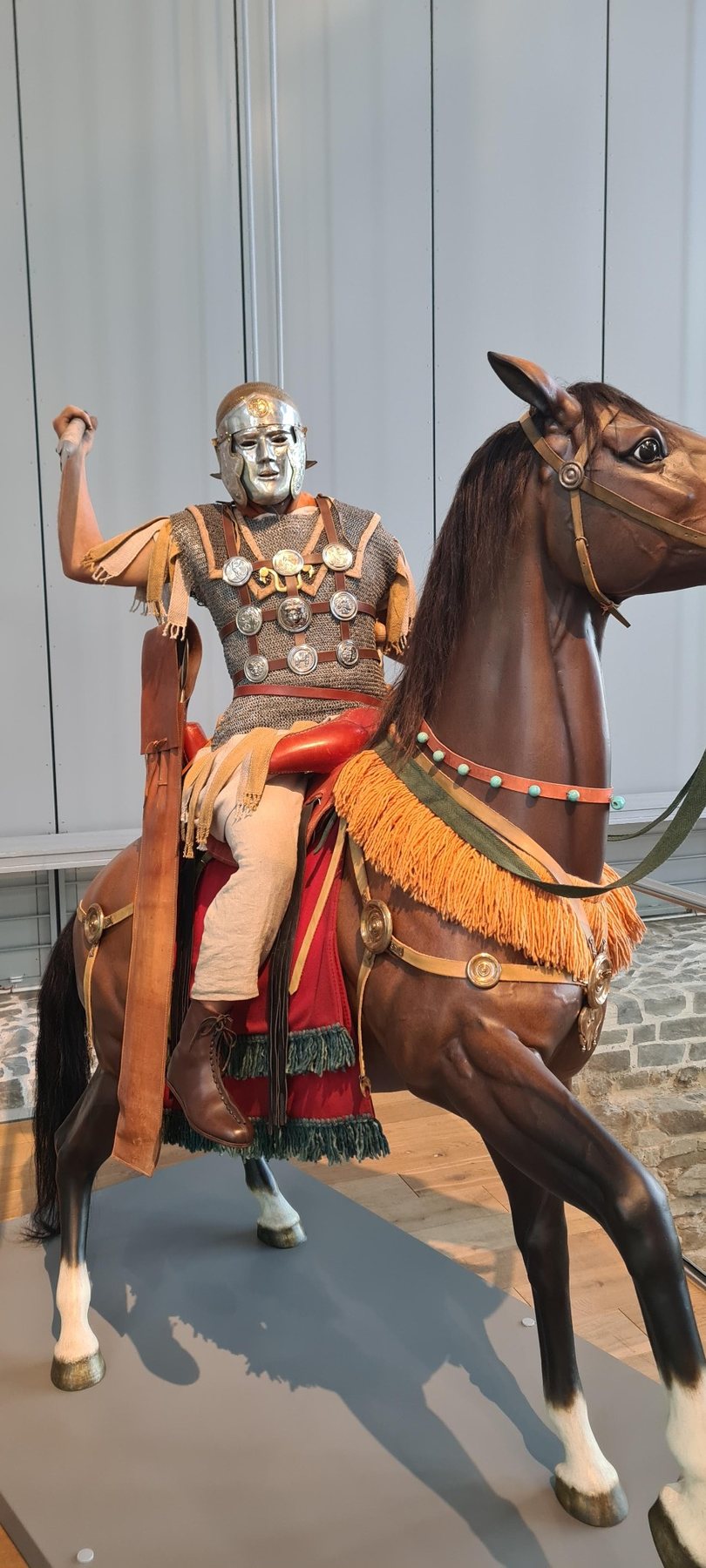
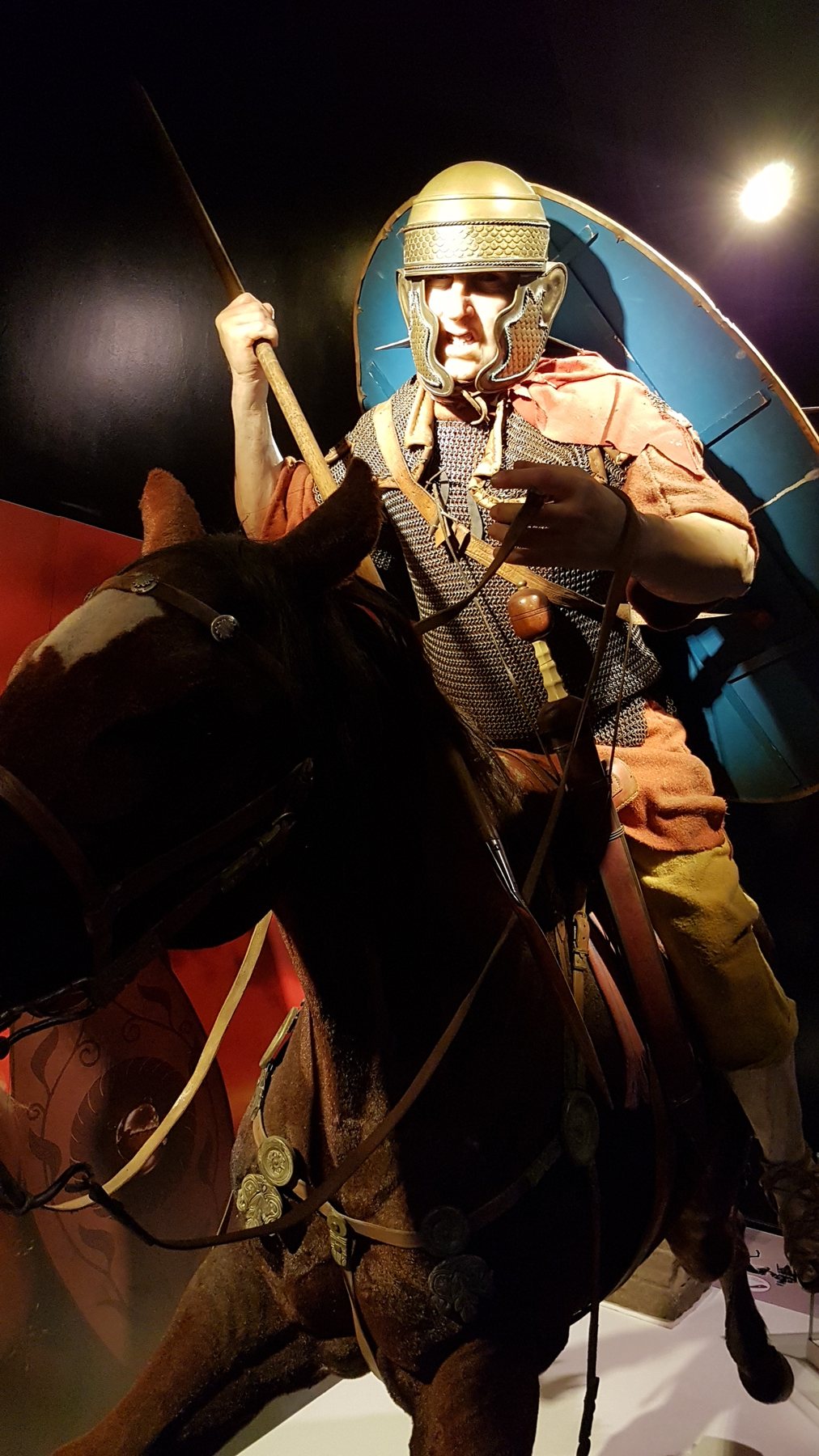
A cavalryman needed weapons that could be used effectively while mounted. He might carry a spear or javelins together with a shield and sword.
The cavalry sword was generally longer than the infantryman’s short gladius. It was called a spatha, and its greater reach helped a mounted soldier strike an opponent below him. Longer swords later became increasingly common throughout the Roman Army.
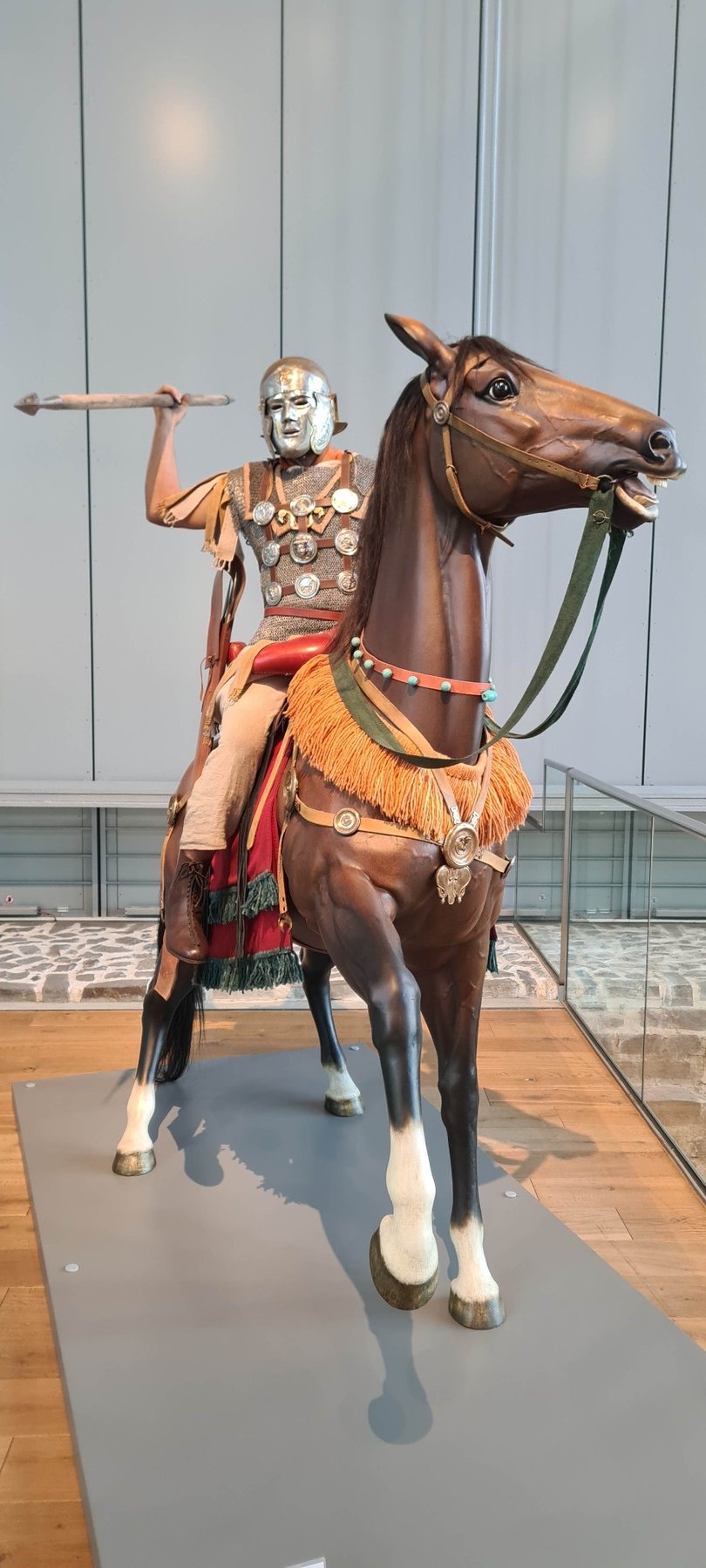
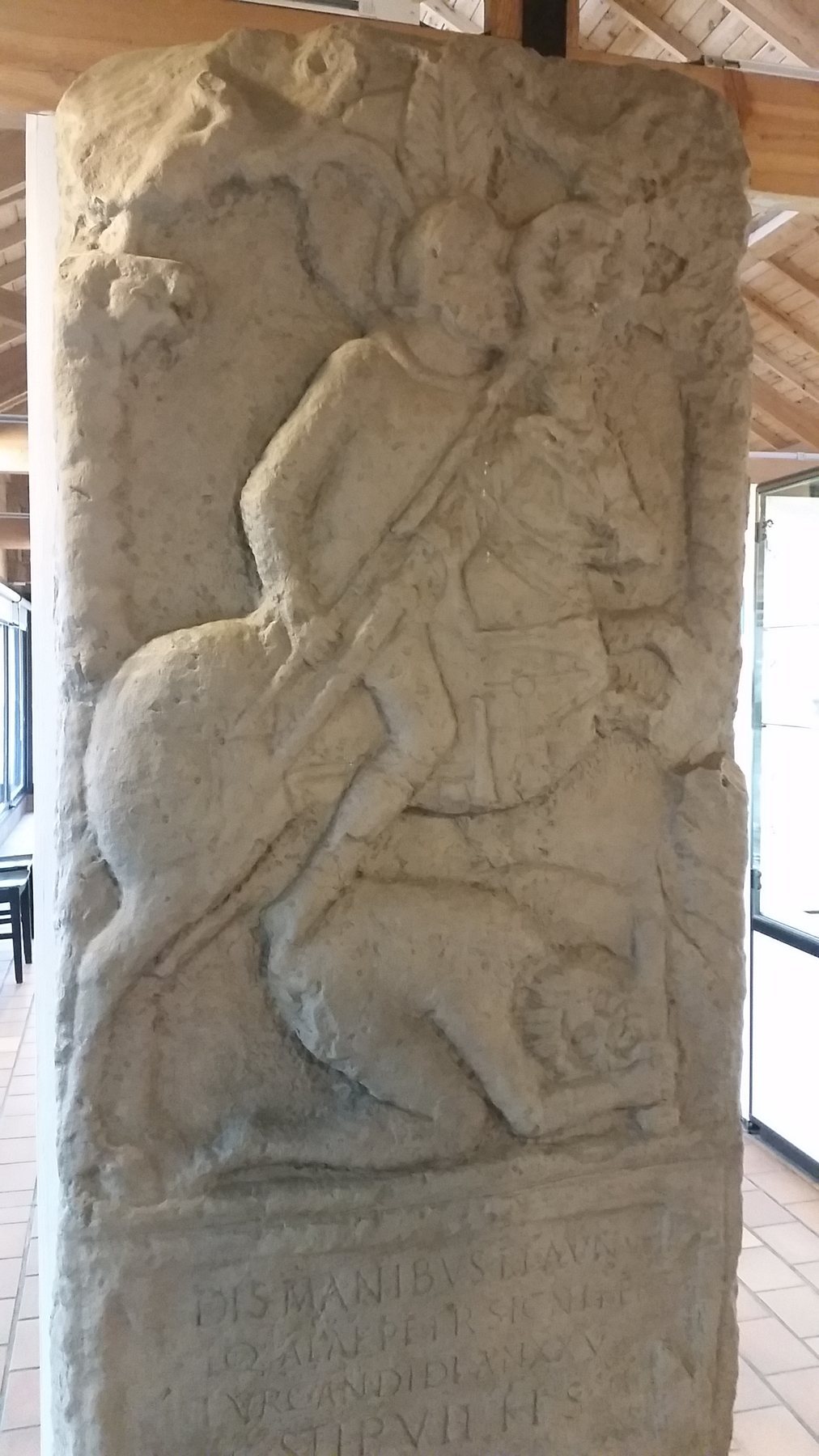
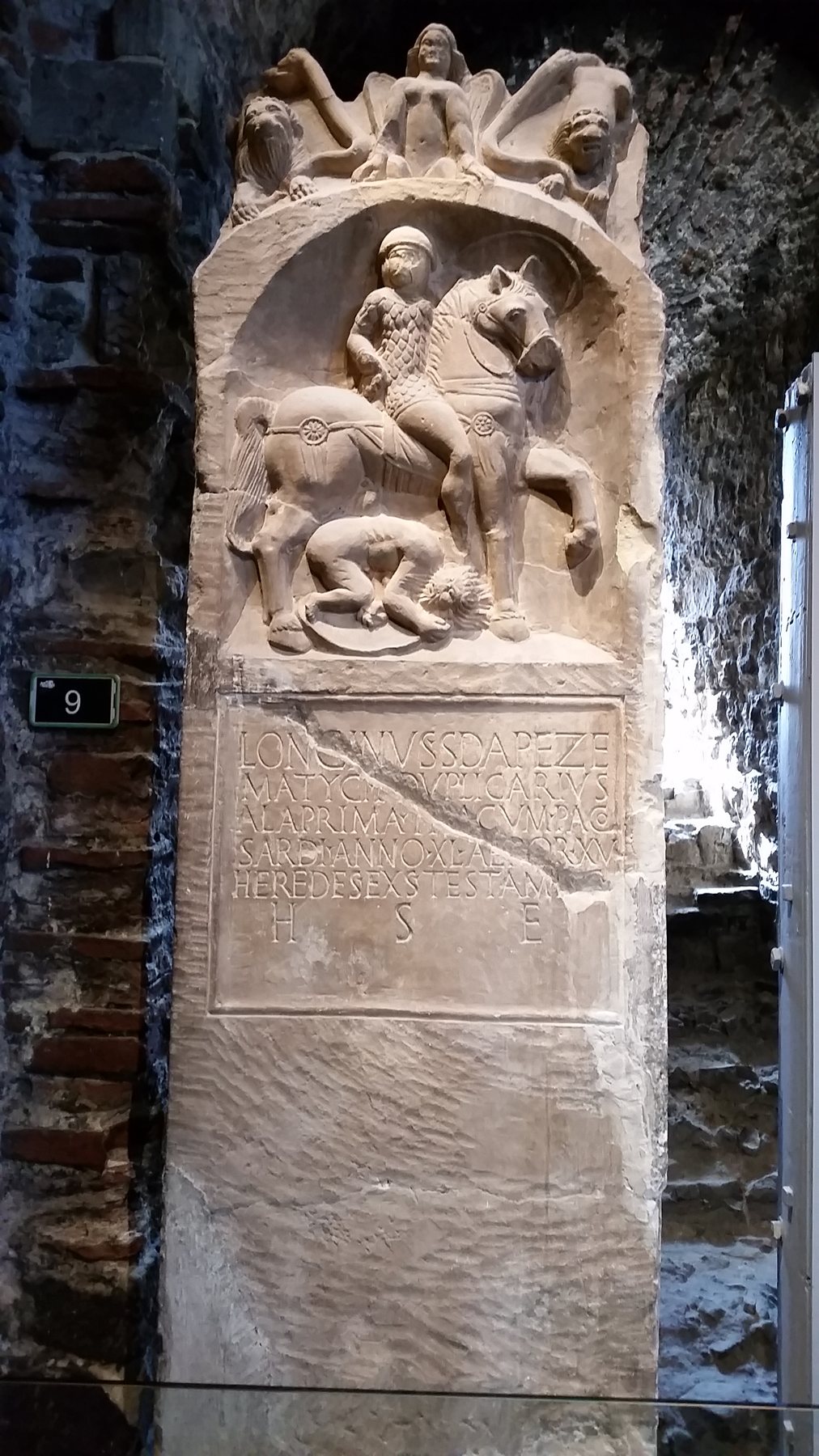
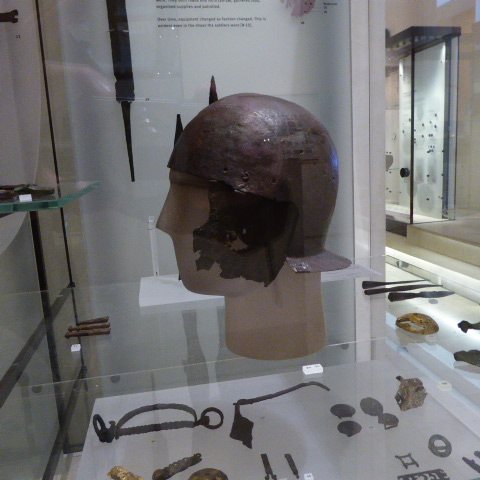
Equipment was not completely uniform and changed over time. Tombstones, sculpture, weapons and pieces of horse harness allow archaeologists to reconstruct how riders and their mounts may have appeared.
Training, display and prestige
The mysterious cavalry masks
Some of the most remarkable Roman cavalry objects are helmets fitted with idealised face masks. They are generally associated with elaborate cavalry exercises and displays known as the hippika gymnasia.
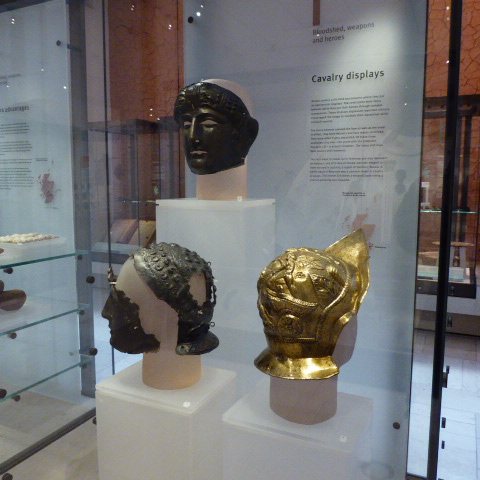
During these displays, riders demonstrated their control of their horses, threw javelins and took part in mock combat. Horses and riders could be decorated with colourful and highly ornate equipment.
The masks would have restricted vision and breathing, making their routine use in real battle questionable. The most elaborate examples were probably intended primarily for training, ceremony and competitive display.
The spectacle had a serious purpose. It developed horsemanship, teamwork, accuracy and confidence while demonstrating Roman military skill and prestige.
An indispensable arm
Speed, reach and flexibility
Cavalry never replaced the disciplined heavy infantry upon which Roman battlefield success was founded. It complemented it.
Mounted troops gathered intelligence, protected marching columns, patrolled frontiers, carried messages, fought enemy cavalry and pursued defeated armies. On Hadrian’s Wall they could operate across a far wider area than the immediate surroundings of their forts.
The Roman Army’s strength was not that every soldier fought in the same way. It was its ability to bring together different types of troops and combine their particular skills. Cavalry gave the army mobility—and without it, even the formidable Roman legions could be dangerously vulnerable.
Continue exploring
Further information
Teachers and families can learn more through the English Heritage history of Chesters Roman Fort, its account of Roman stable-barracks and the British Museum’s Roman Britain collection.
Bring the evidence into your classroom
Roman Workshop Day for Key Stage 2
Explore Roman Britain through artefacts, clothing, military equipment, stories and practical activities.