
A land power goes to sea
Were the Romans really not sailors?
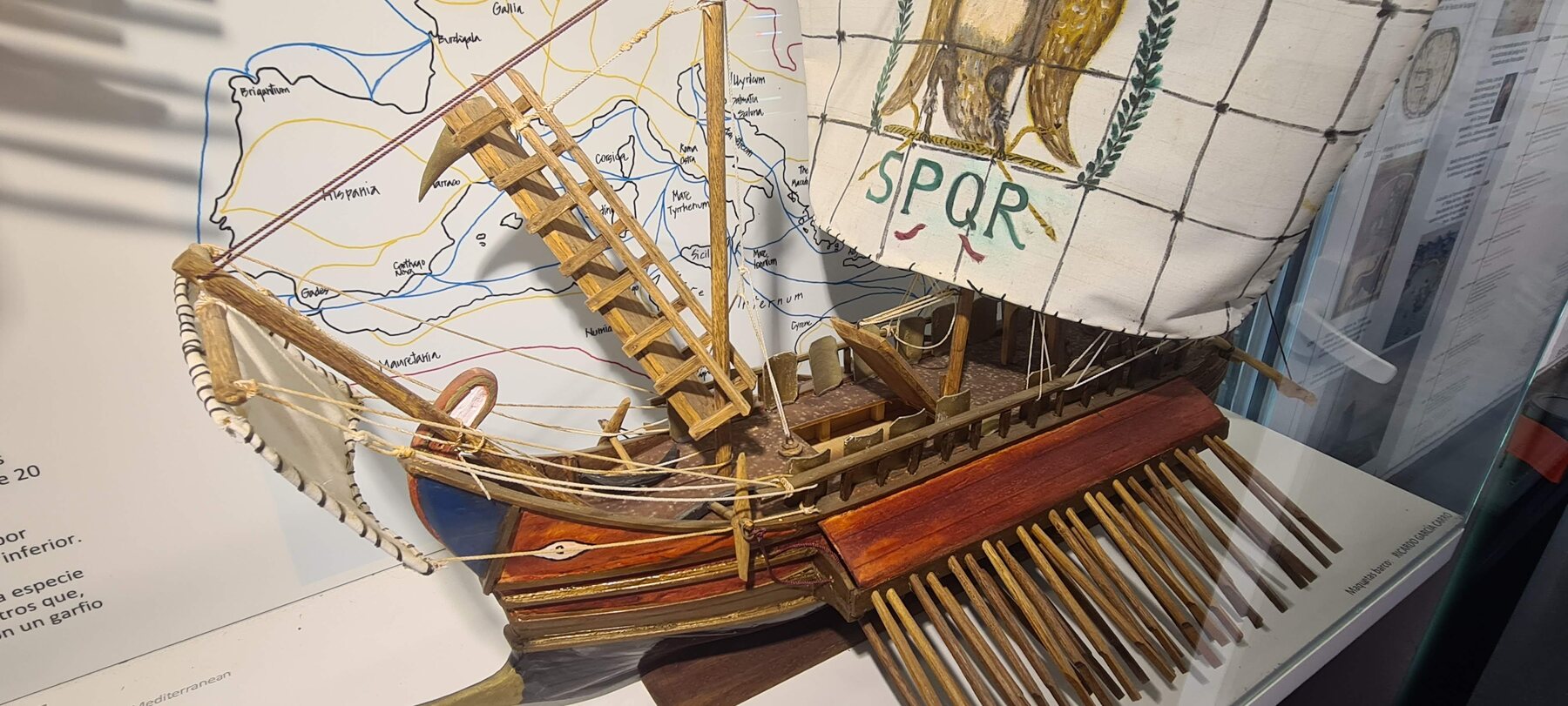
Rome became famous for its disciplined armies, but it was not completely without maritime experience. Italian communities and Rome’s allies already sailed, traded and fought at sea. The real problem at the beginning of the First Punic War was scale: Rome had never before built and handled a great fleet of the largest warships.
Our main account comes from the Greek historian Polybius. He says Roman shipwrights did not yet understand the construction of the five-banked warships called quinqueremes. When a Carthaginian vessel ran aground, the Romans used it as a pattern and built a fleet. The story may simplify a more complicated process, so it is safest to say Polybius reports that the captured ship became their model.
“served them as a model on which they constructed their whole fleet”Polybius, Histories 1.20
Evidence check: Ancient writers often shaped events into memorable stories. A captured ship could provide a pattern, but skilled allied sailors, shipwrights, timber, money and training were also essential.
Turning a sea battle into an infantry fight
The corvus
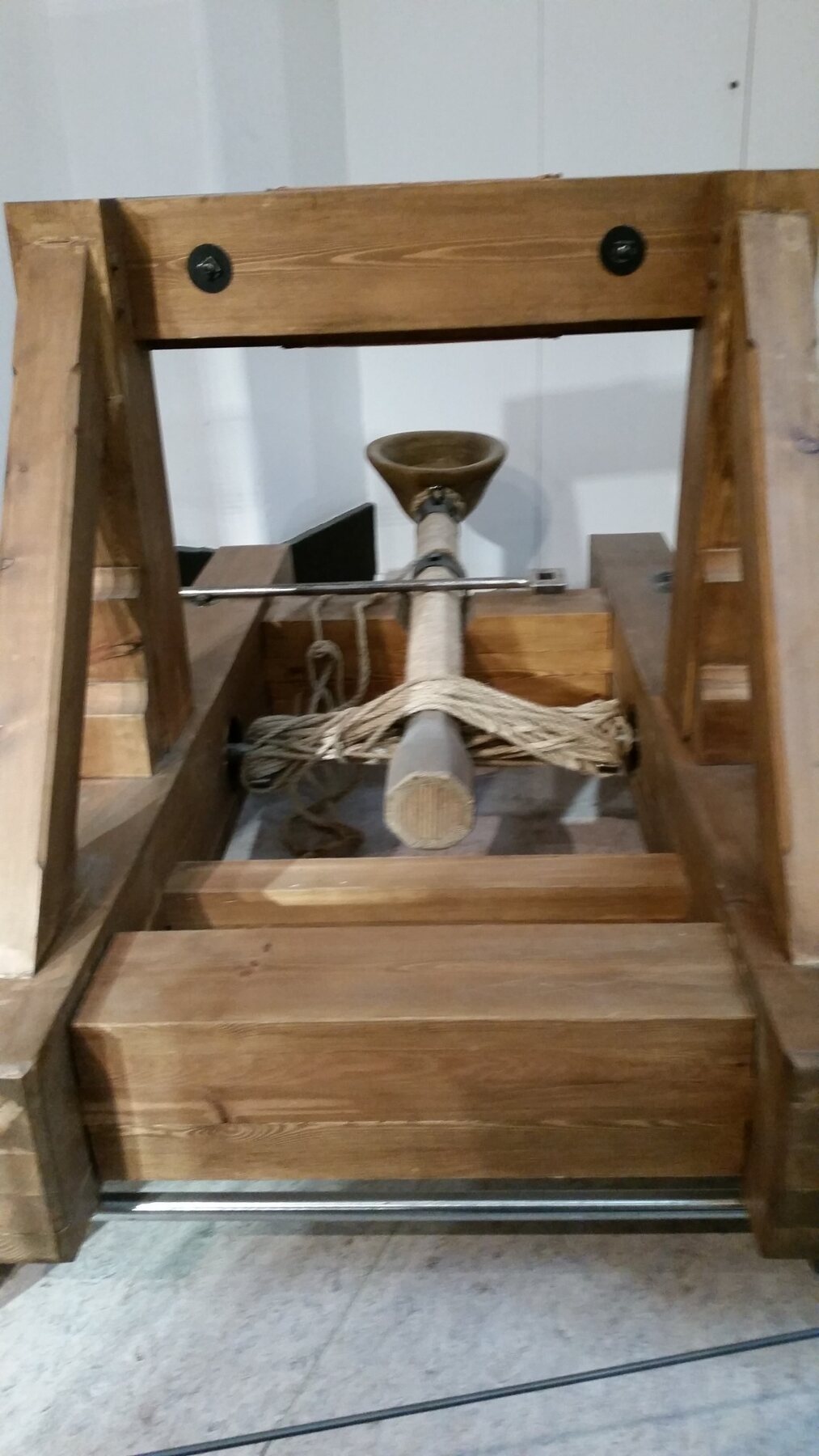
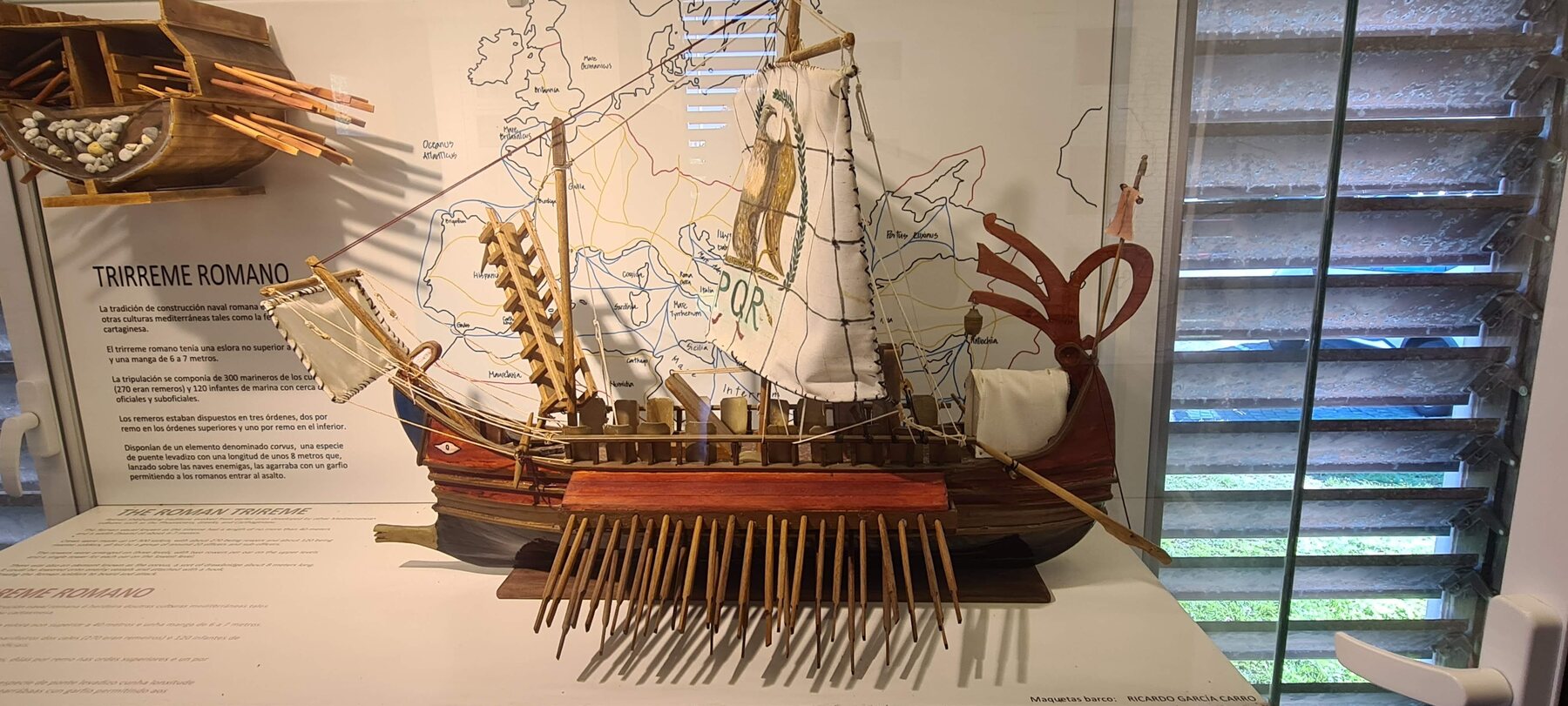
The Romans still had to defeat more experienced Carthaginian crews. Polybius describes a boarding bridge later known as the corvus, or “raven”. A spike underneath bit into an enemy deck, holding the ships together while Roman infantry crossed the bridge.
This allowed Rome to use its strength in close combat. Polybius says soldiers boarded “two abreast”, protected by their shields. The device helped win early victories, although it may have made ships less stable. It then disappears from surviving accounts; historians should not assume that it remained standard equipment.
Command of the Mediterranean
Pompey and the pirates
By the first century BC piracy threatened shipping, coastal communities and Rome’s food supply. In 67 BC Pompey the Great received extraordinary powers to clear the Mediterranean. Plutarch says he divided the sea and coasts into thirteen commands and gave each commander ships and troops.
Plutarch credits Pompey with 500 ships, 120,000 infantry and 5,000 cavalry. Such figures may be exaggerated, but they convey the scale of the operation. The western Mediterranean was cleared first; Pompey then concentrated his forces against the pirates’ strongholds in Cilicia.
It was a lesson Rome would use repeatedly: fleets could patrol sea lanes, escort shipping, carry troops and attack an enemy from an unexpected direction.
Caesar crosses the Channel
Warships support the landing
Julius Caesar’s first expedition to Britain in 55 BC shows transports and warships working together. His large transports could not reach the beach, forcing the soldiers to jump into deep water while carrying their weapons. Britons waited in the shallows to attack.
Caesar ordered the more manoeuvrable warships to move onto the enemy’s exposed flank. Their unfamiliar appearance, missiles and artillery helped force the Britons back while the legionaries struggled ashore.
“with slings, arrows, and artillery”Caesar, Gallic War 4.25
For the second expedition Caesar ordered ships that were lower than Mediterranean vessels, making them easier to load and beach, but broader so that they could carry horses and cargo. They could be propelled by both oars and sails.
Caesar had already encountered the Veneti of Atlantic Gaul, whose strong oak ships had flat bottoms suited to shoals and tides. His description demonstrates why Channel and Atlantic conditions demanded different solutions, although he does not actually say that his later invasion ships were direct copies of Venetian vessels.
How were the ships made and loaded?
Technology beneath the deck
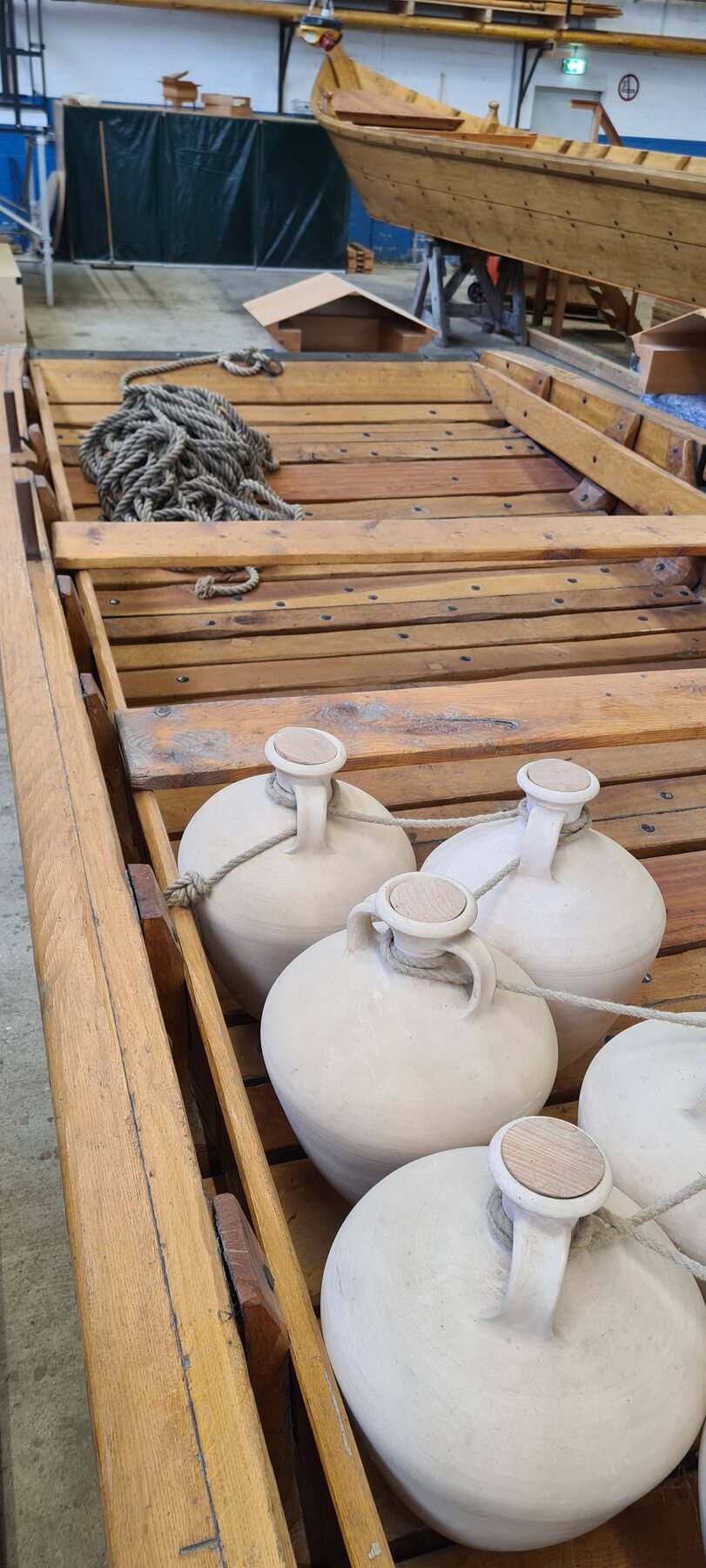
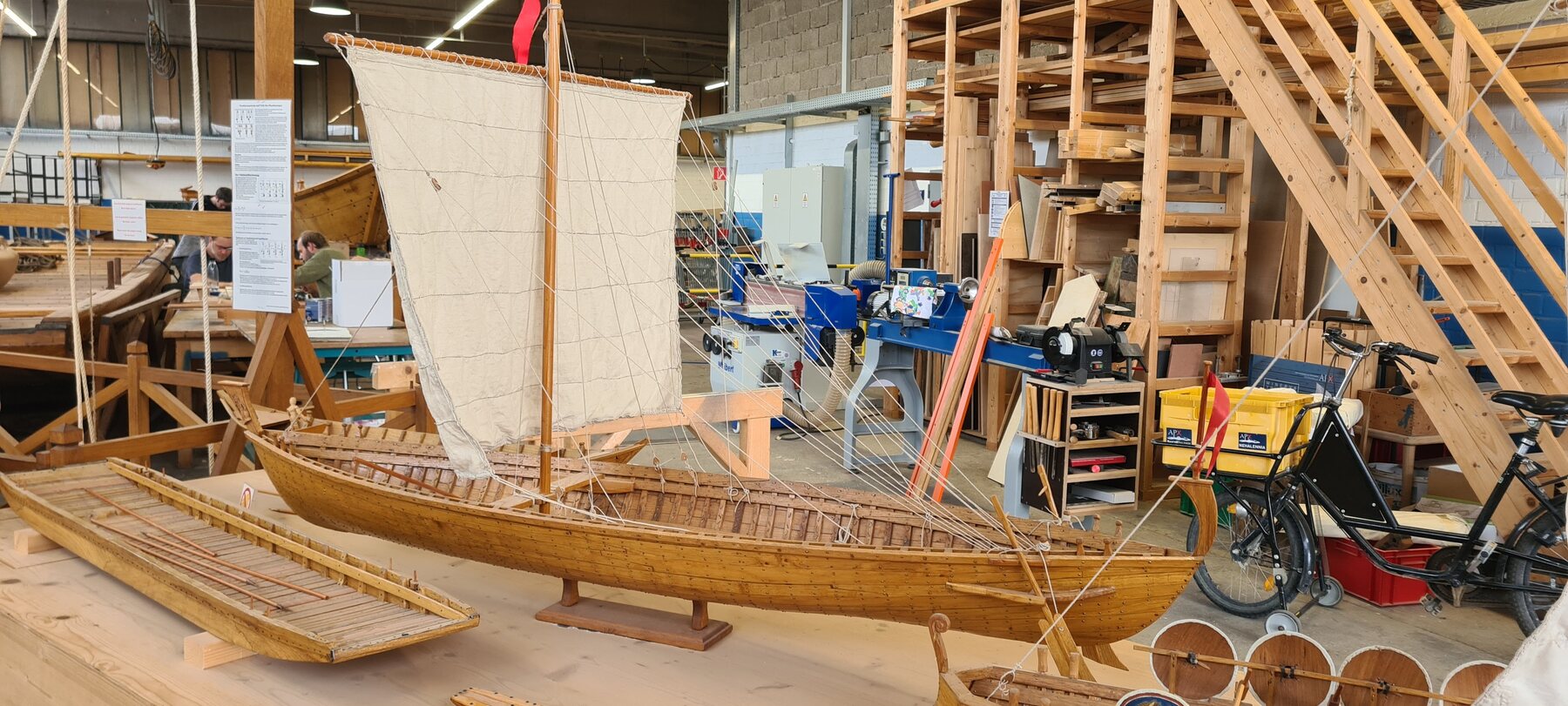
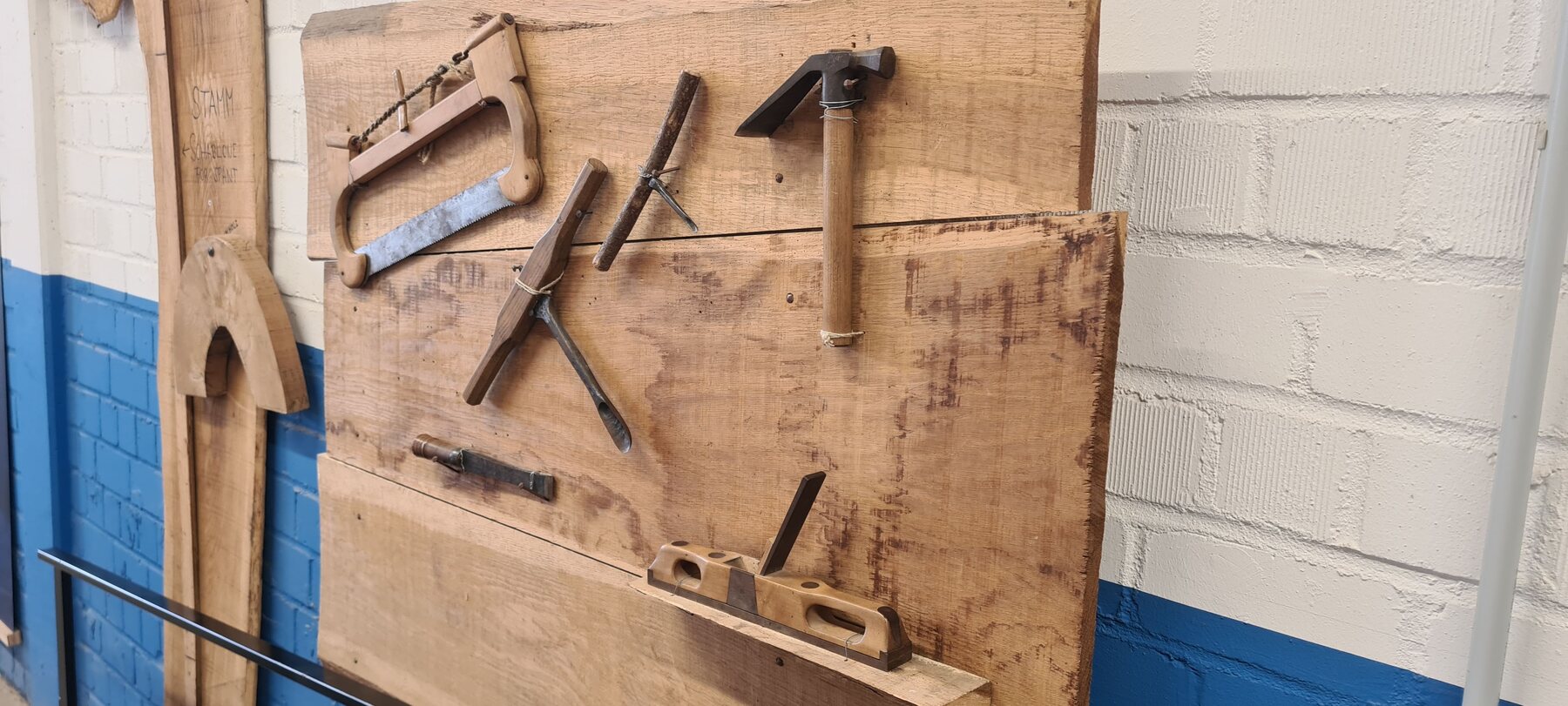
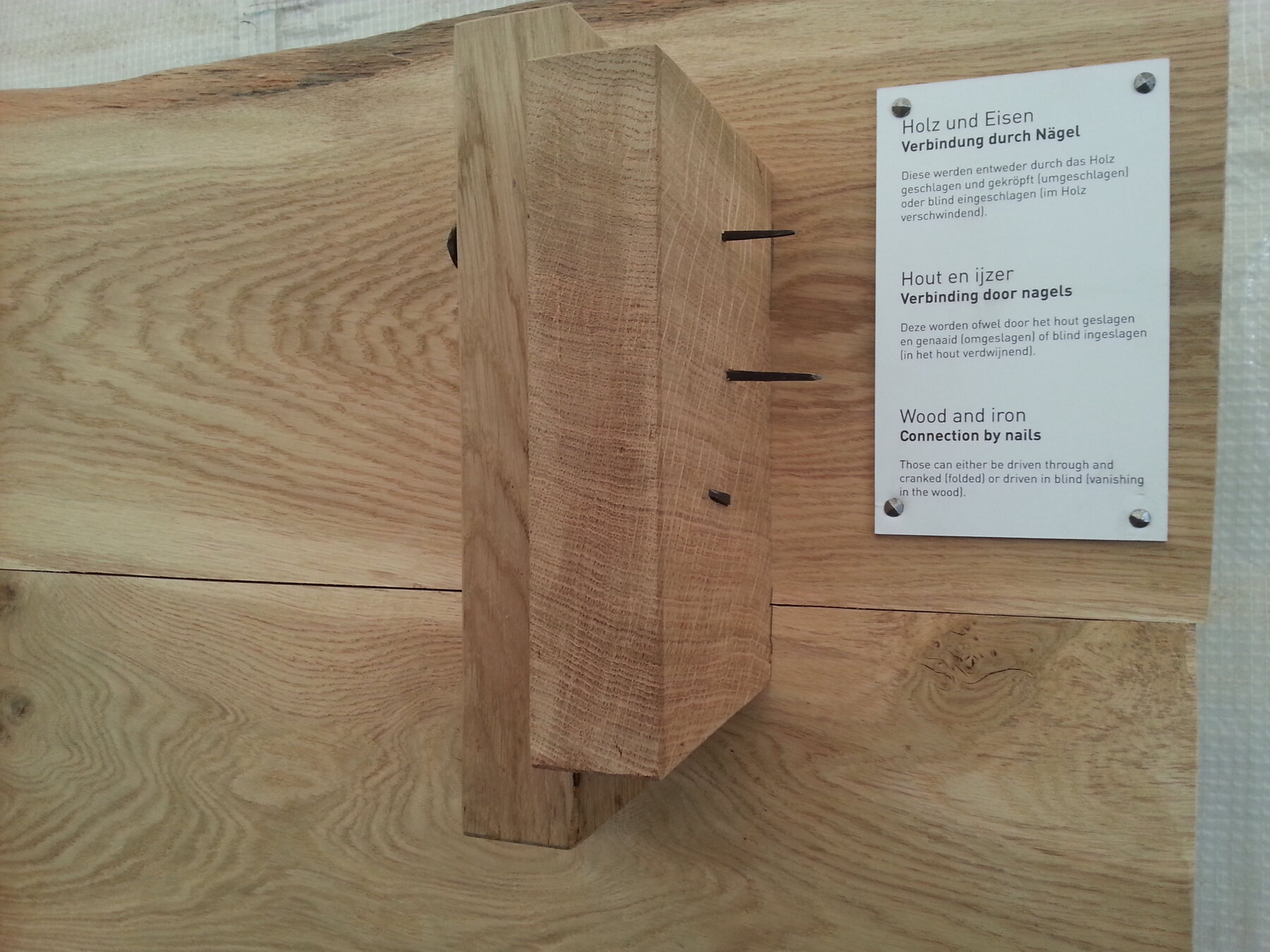
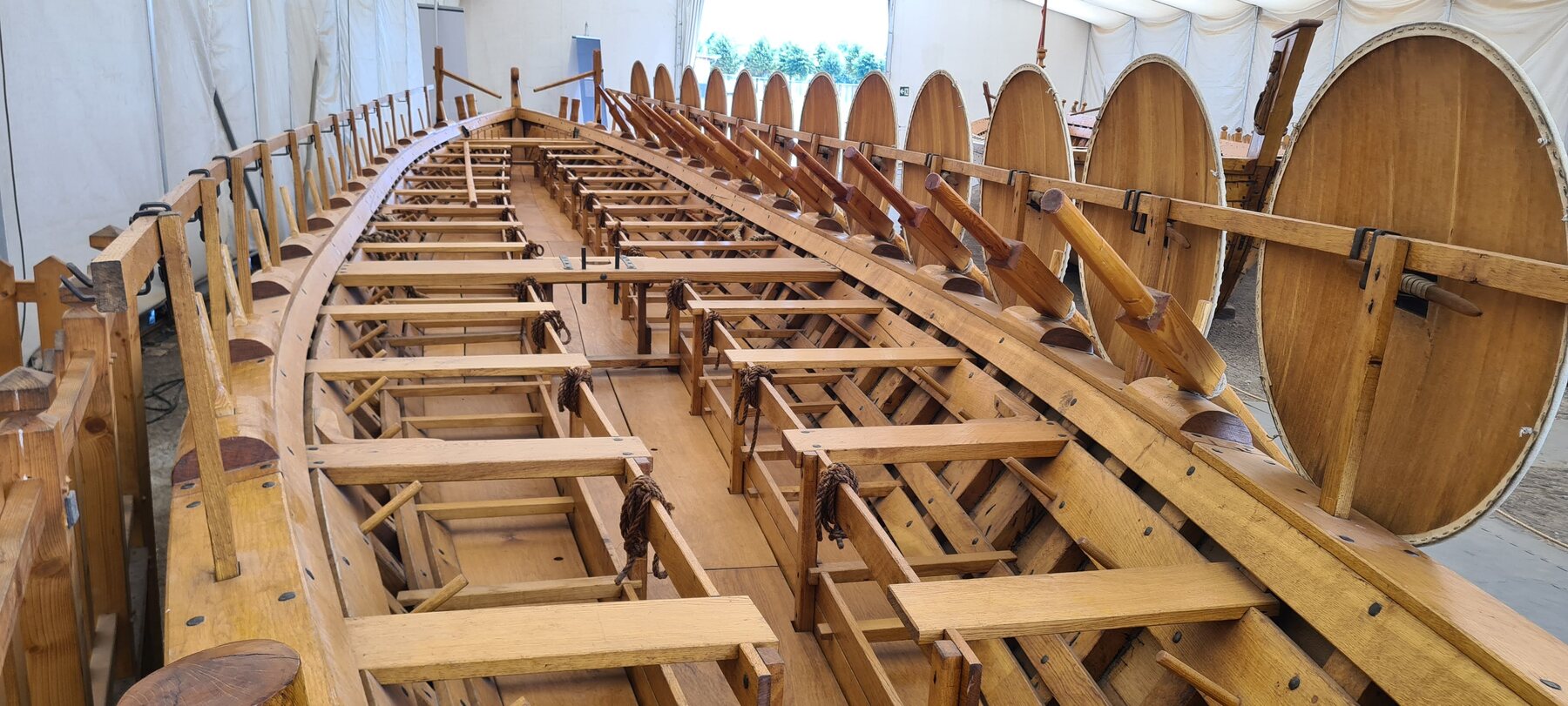
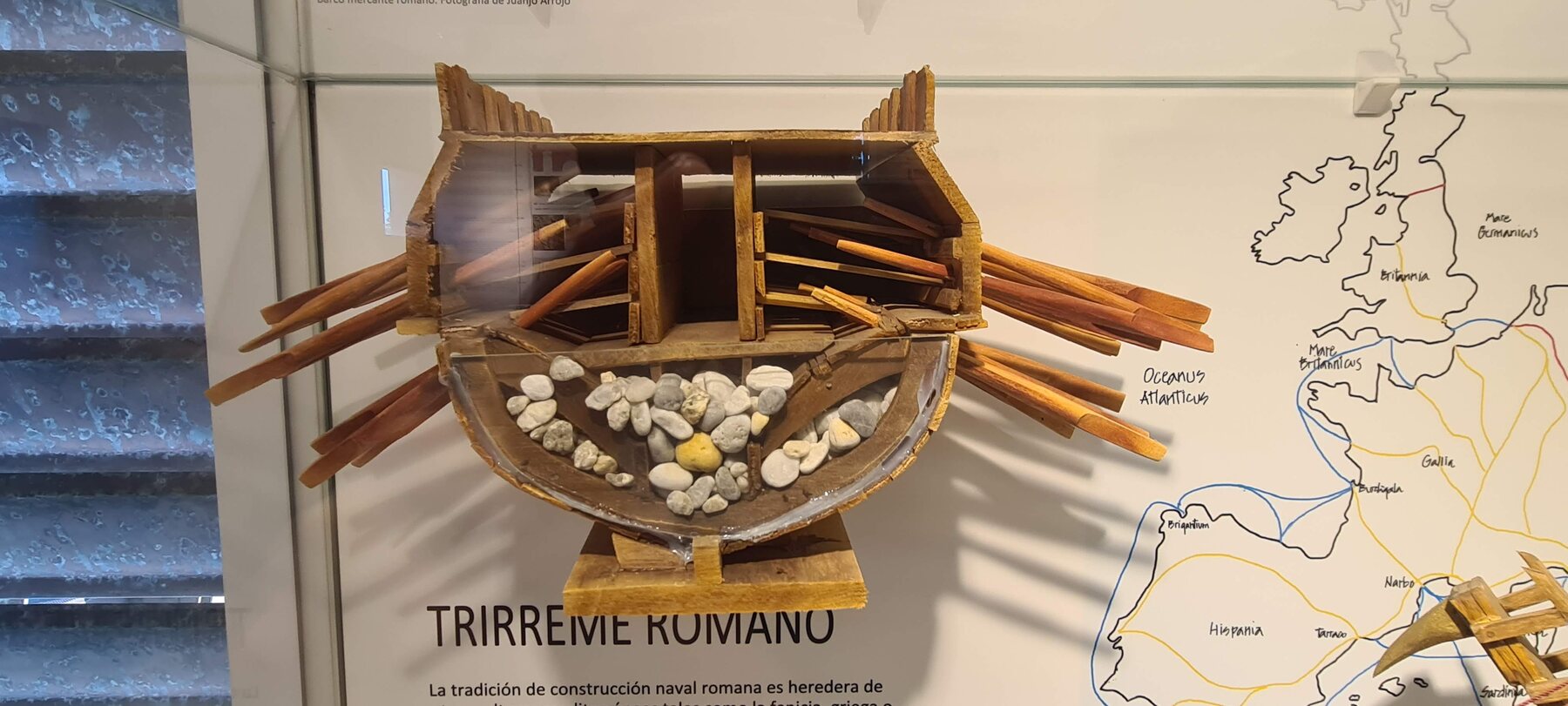
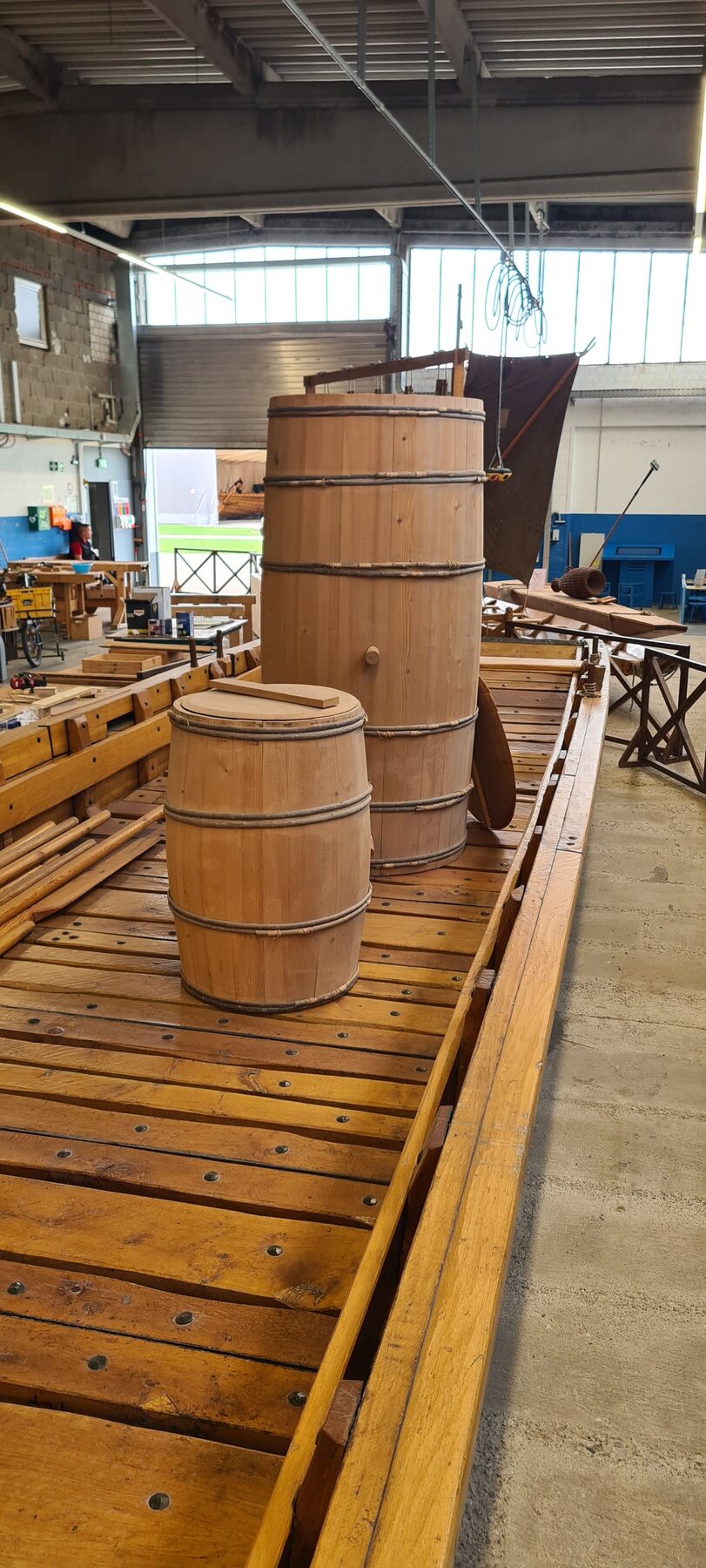
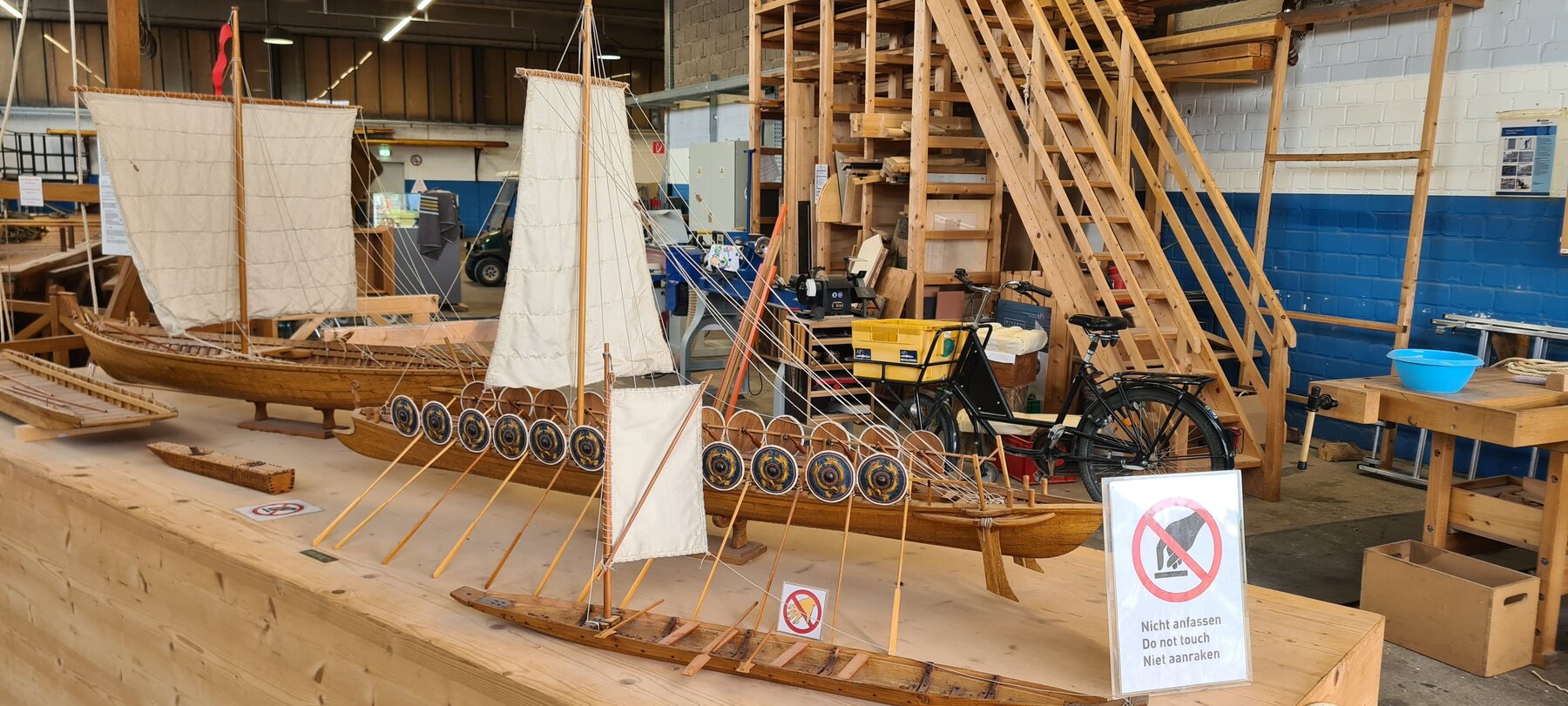
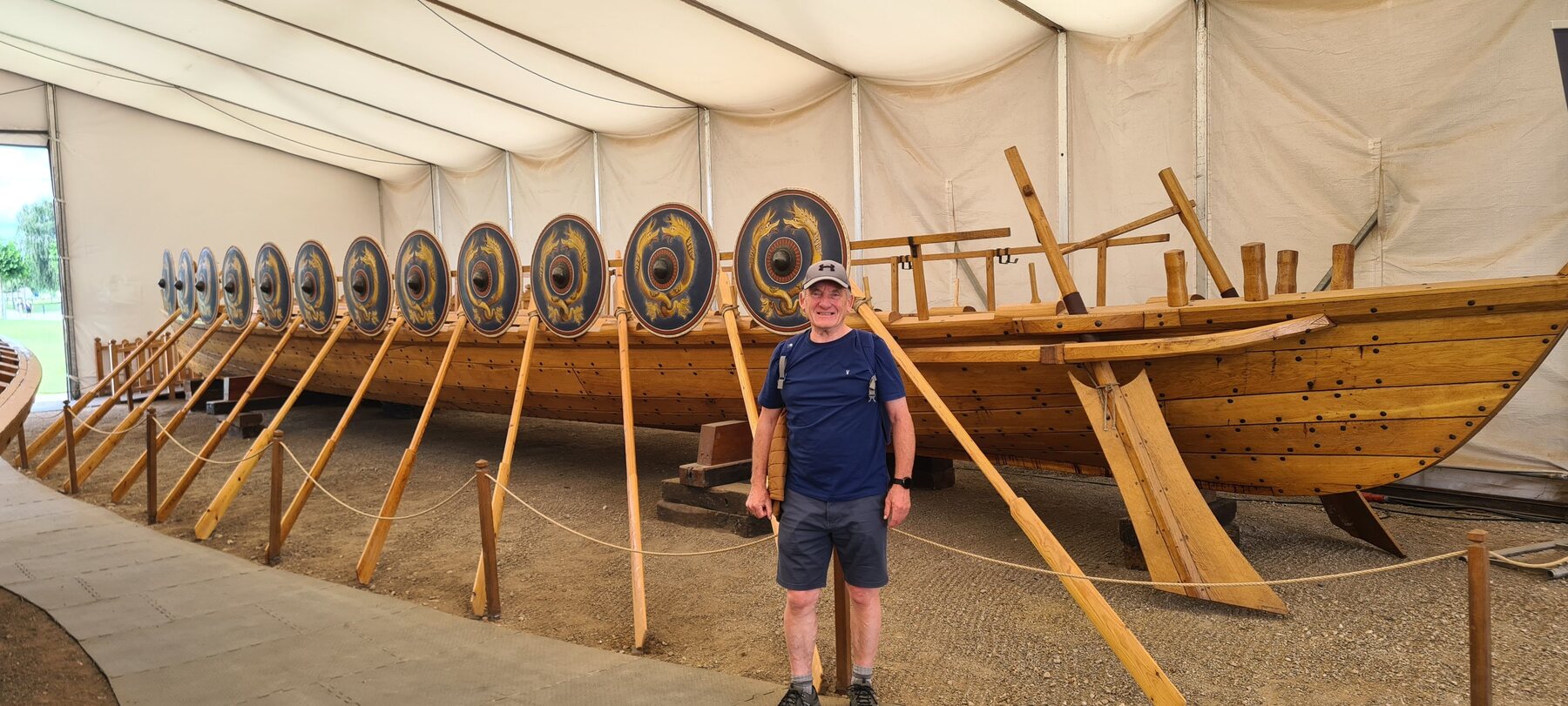
Models and reconstructions reveal details often left out of written accounts: timber joints, oar benches, ballast and the careful arrangement of cargo.
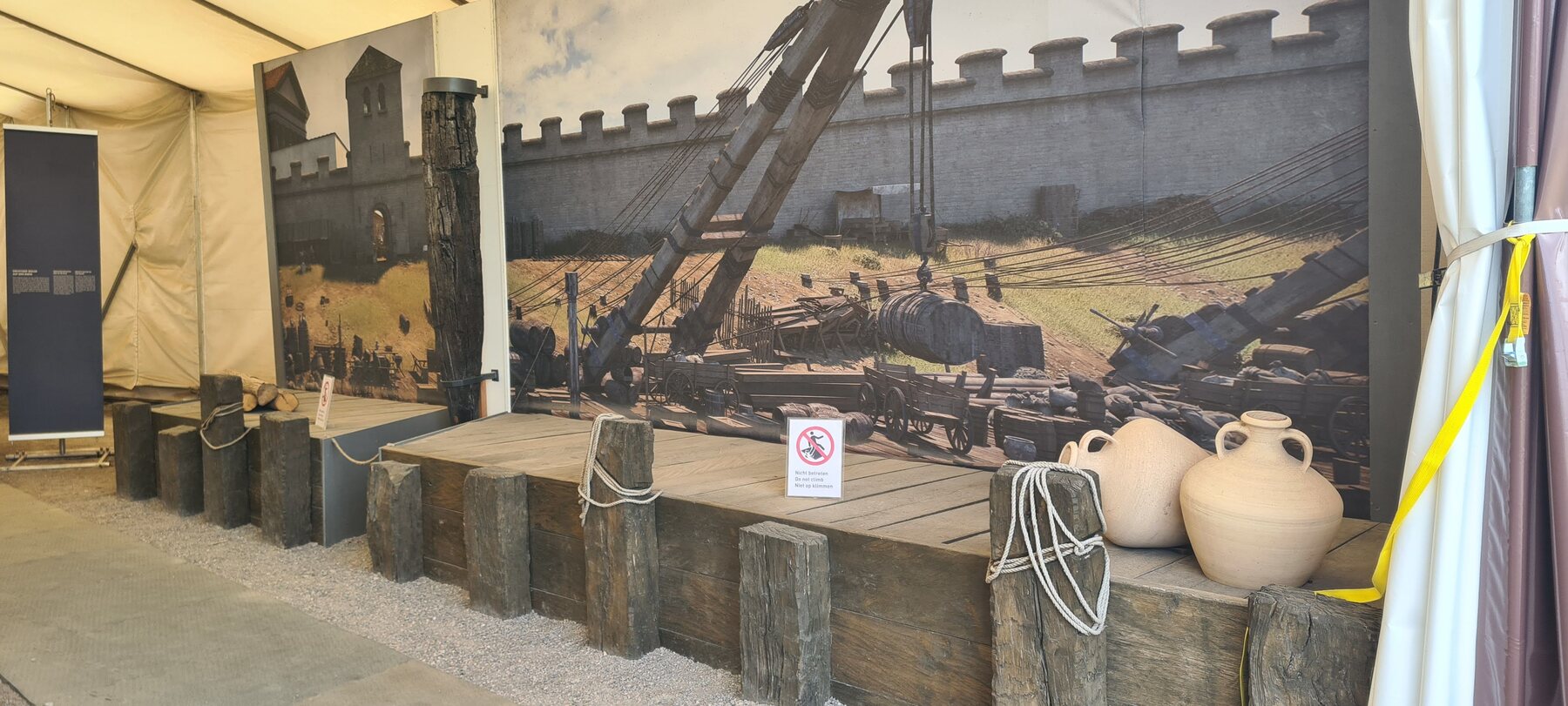
The Roman Army was also capable of building fleets. Caesar says that he ordered warships to be constructed on the River Loire for his campaign against the Veneti. Before his second expedition to Britain, the legions spent the winter building about 600 specially designed transports and 28 warships under the direction of military officers. The work would have drawn upon soldiers with specialist craft skills as well as experienced shipwrights and locally available knowledge. Roman military engineering did not stop at roads, bridges and forts: an army could organise timber, labour and expertise to build and repair ships on a remarkable scale.
The conquest of AD 43
Crossing and supplying an army
Aulus Plautius needed transports for legionaries, auxiliaries, cavalry horses, weapons, food and equipment. Cassius Dio says that the invasion force crossed in three divisions so that a single mass of ships could not be prevented from landing. He does not tell us the number of vessels, so any precise fleet total would be guesswork.
“They were sent over in three divisions”Cassius Dio, Roman History 60.19
The fleet’s work did not finish at the beach. A large campaigning army consumed enormous quantities of grain, fodder, equipment and replacement animals. Ships could move heavy supplies around the coast and into navigable rivers, where smaller craft could take them inland.
Britain’s permanent legionary fortresses illustrate the value of water transport. York stood near the Ouse and Foss, Chester beside the Dee and Caerleon beside the Usk. Rivers did not replace roads, but they formed part of a connected military supply system.
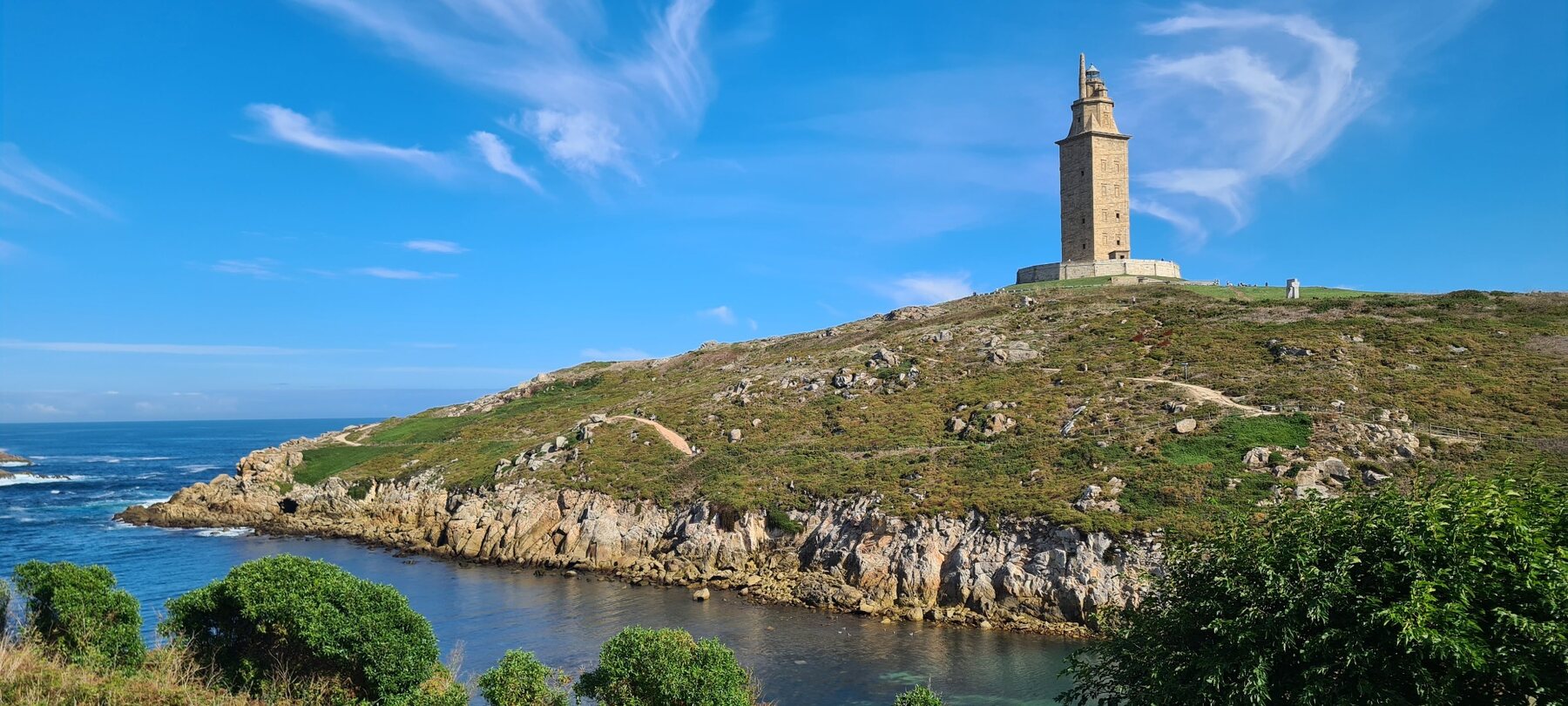
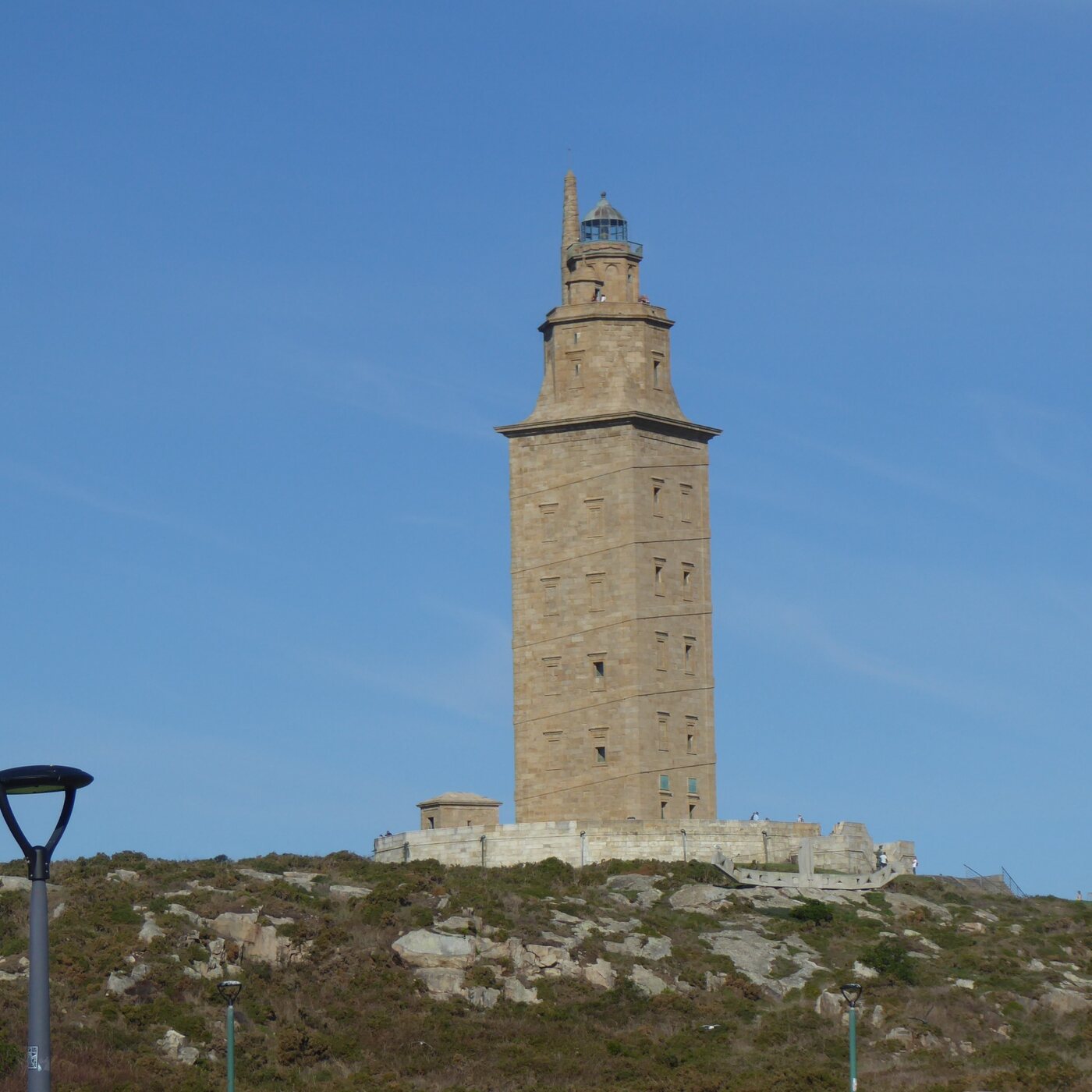
Lighthouses helped ships find important harbours and dangerous coastlines. The Tower of Hercules at A Coruña was built around the end of the first century AD or the beginning of the second. Its Roman core survives beneath the later exterior and it still serves as a lighthouse. At Dover, two Roman pharoi marked the harbour; one survives within Dover Castle. A further lighthouse at Boulogne helped guide shipping on the opposite side of the Channel.
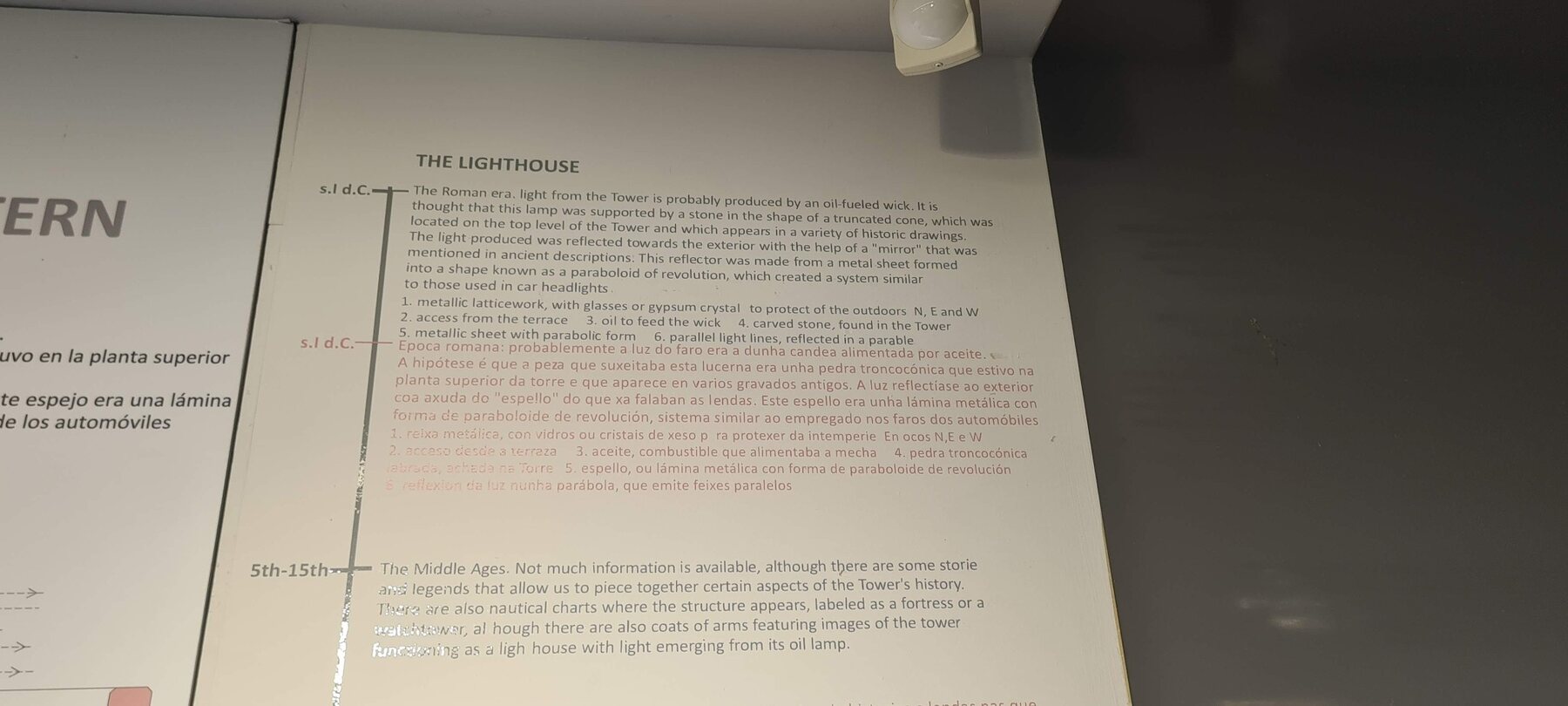
The interpretation at A Coruña proposes that its Roman light came from an oil-fed wick at the top of the tower, possibly strengthened by a shaped metal reflector. The precise arrangement is uncertain, but maintaining a visible light would have required fuel, attendants and protection from Atlantic weather.
Light, navigation and legend
The Tower of Hercules
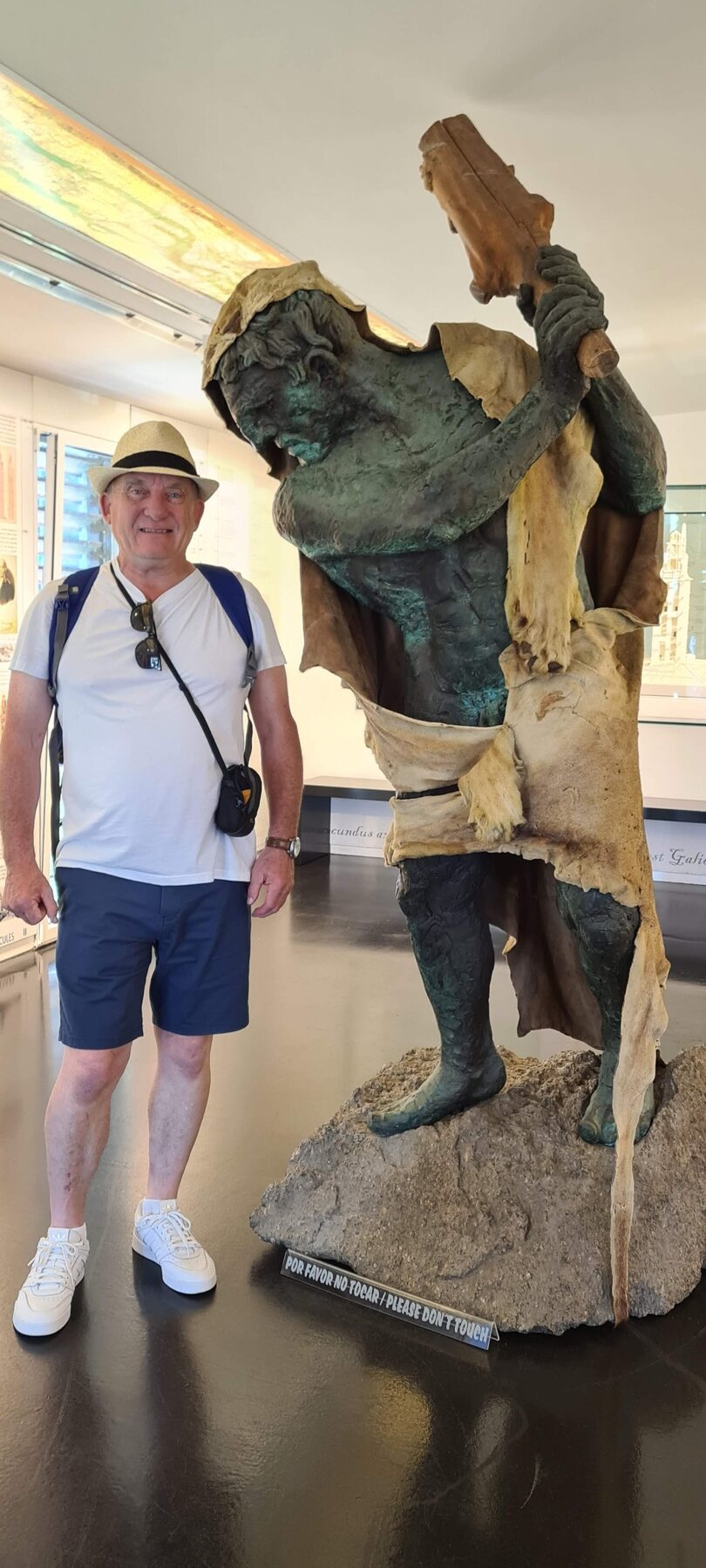
Its present name reflects a later legend in which Hercules defeated the giant Geryon and a tower was raised at the place where he buried the giant’s head. The story helped explain an already ancient monument, but it is not evidence for the lighthouse’s Roman name or original dedication.
Fleet and army together
Agricola advances into Scotland
During Agricola’s northern campaigns in the AD 80s, the fleet explored harbours and estuaries, carried supplies and threatened the enemy from the sea. Tacitus describes land and naval forces acting together and sharing a camp.
“the war was pushed forward at once by land and sea”Tacitus, Agricola 25
Ships could scout the coast, land troops away from the main army and create uncertainty about where Rome might strike next. Tacitus says infantry, cavalry and naval personnel compared their adventures around the same campfires—an unusually vivid glimpse of combined operations.
The fleet later sailed around northern Britain. Tacitus presents the voyage as proof that Britain was an island, although sailors and coastal peoples must already have possessed considerable geographical knowledge.
The Classis Britannica
Naval personnel on Hadrian’s Wall
Roman fleets were imperial military formations rather than a separate service like the modern Royal Navy. Their personnel included sailors, oarsmen, marines and craftsmen, many recruited as non-citizens. They could fight, build and work ashore as well as serve on ships.
A common misconception: Roman warships were not normally rowed by chained slaves. The oars were handled by trained naval servicemen—free men serving in Rome’s armed forces—whose skill and teamwork were essential in battle. They were not legionaries, but they were military personnel. Enslaved people were sometimes recruited during exceptional emergencies, which may have helped create the later popular image.
The British fleet, the Classis Britannica, patrolled waters, moved supplies and supported operations. An inscription from near Hadrian’s Wall records that a detachment of the British fleet built a structure under the governor Aulus Platorius Nepos. It is direct evidence that fleet personnel worked on the frontier.
South Shields, at the mouth of the Tyne, became an important supply base with large granaries. Maritime deliveries could enter the Tyne and feed the eastern end of the Wall, while western ports and rivers connected the frontier to the Irish Sea. Not every sack of grain came by sea, but coastal shipping formed a crucial part of the network.
Naval skill could also be used in surprising places. A detachment from the fleet at Misenum is associated with the great awning above the Colosseum—specialist sailors were well suited to controlling its complex ropes.
Where river met tide
Neptune and Oceanus at Newcastle
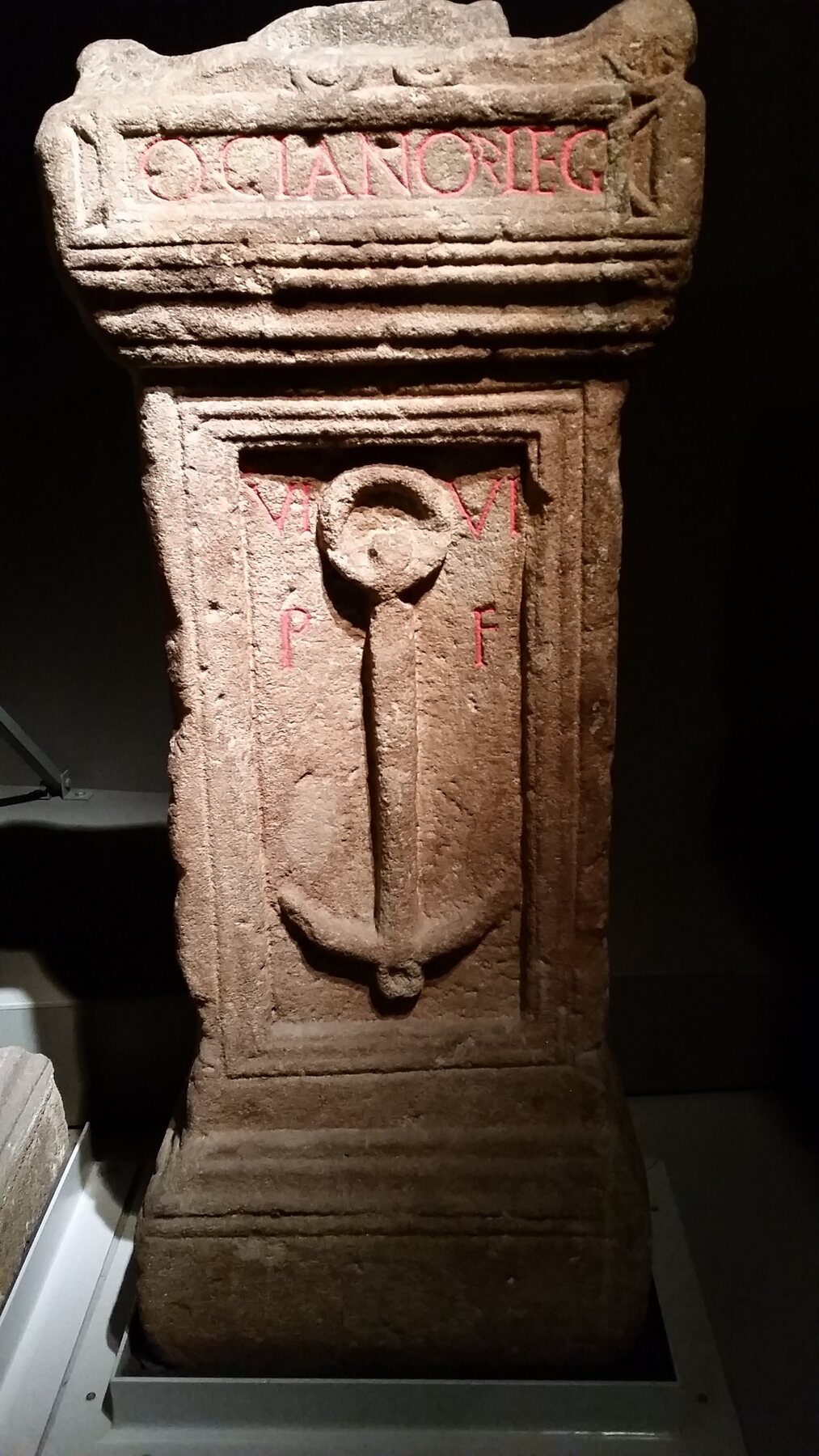
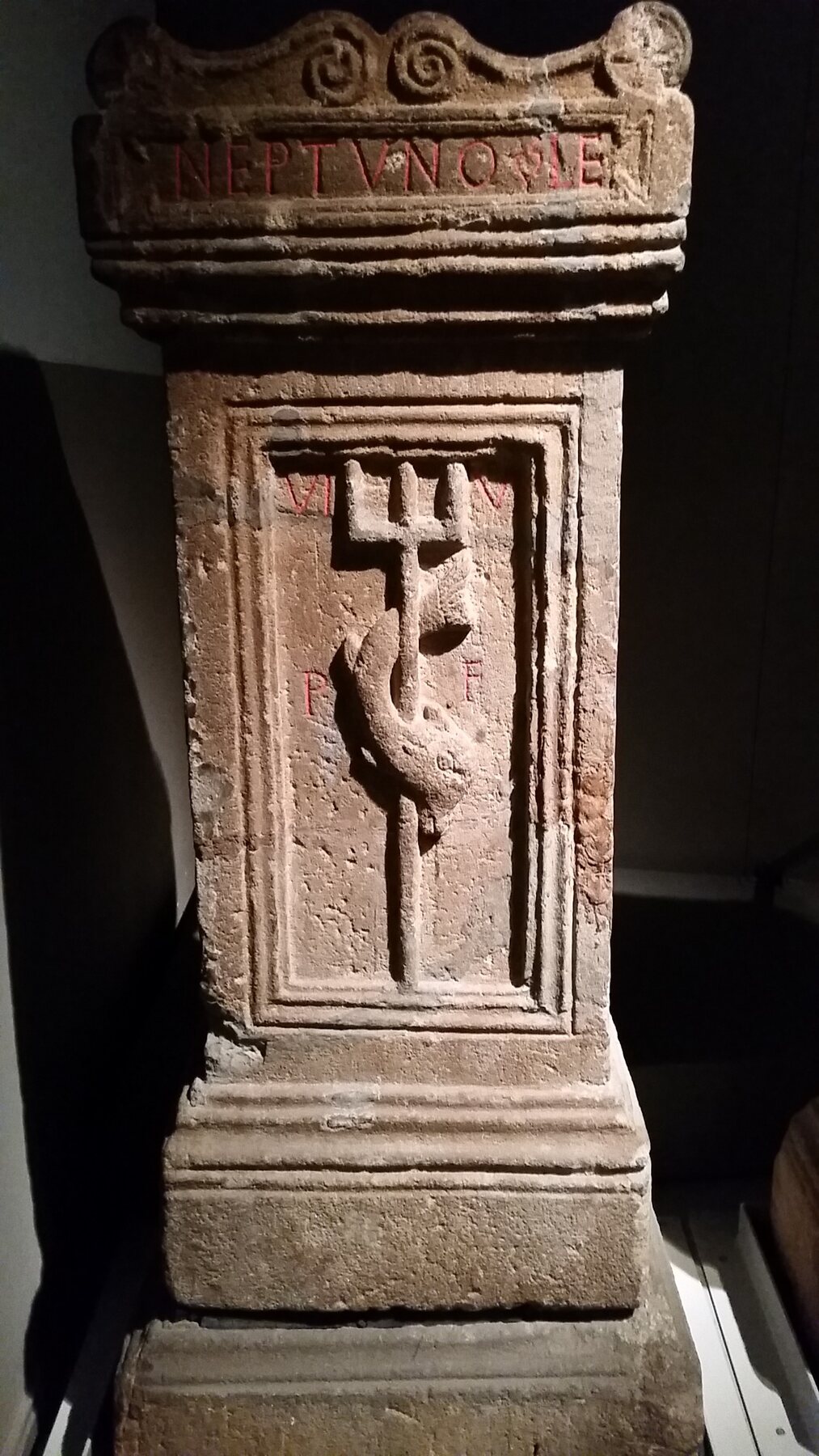
The two altars were found during work on the Swing Bridge at Newcastle and are now displayed in the Great North Museum. Both were dedicated by the Sixth Legion Victrix, probably when the Roman bridge across the Tyne was built around AD 122.
The Roman Inscriptions of Britain suggests they belonged to a shrine at the point where the river, protected by Neptune, met the tidal waters of Oceanus. The pair reminds us that waterways were not only transport routes. To the Romans they were powerful and potentially dangerous places requiring divine protection.
A fleet becomes a throne
Carausius breaks away from Rome
By the late third century, Frankish and Saxon raiders were attacking shipping and the coasts of northern Gaul. Carausius—an experienced military officer and, according to Aurelius Victor, a skilled sailor—was ordered to prepare a fleet and clear the Channel approaches.
The later historian Eutropius says that Carausius repeatedly captured raiders but failed to return all their booty to the provincials or send it to the emperors. He was even suspected of allowing pirates through and waiting until they returned laden with plunder. When the emperor Maximian ordered his execution, Carausius declared himself emperor and took control of Britain and part of northern Gaul in AD 286.
“he assumed the purple and took over Britain”Eutropius, Breviarium 9.21
This accusation comes from sources written under Rome’s restored imperial order and may repeat hostile official propaganda. What is certain is that naval strength helped Carausius maintain a breakaway regime. He struck coins presenting himself as a legitimate emperor, not merely a rebel. His officer Allectus murdered him in AD 293 and ruled until Constantius Chlorus recovered Britain for Rome in AD 296.
Carausius therefore makes an excellent conclusion to the story. The fleet built to protect Roman territory gave its commander the ships, armed men and control of the Channel needed to defy Rome itself.
Read the evidence
Ancient sources and further information
The article draws on ancient writers, inscriptions and modern archaeological interpretation. Ancient texts were written for particular audiences and do not always agree; their claims should be compared with physical evidence.